3 common misconceptions marketers have about Gen Z
Though Gen Z is more than at home with smartphones and technology, marketers often overestimate the role those things play in their daily lives.
Though Gen Z is more than at home with smartphones and technology, marketers often overestimate the role those things play in their daily lives.
Born between 1995 and 2010, Generation Z is projected to make up 40% of all consumers within two years and despite their young ages, they already hold up to $143 billion in direct buying power. They’re heavily involved in many family purchase decisions, in large part because they’re so comfortable with technology. However, they don’t eat and breathe technology as much as we might think. For one, more than two-thirds of Gen Z prefer physical stores to online shopping.
What else makes the digital generation tick? To learn more, Ad Age Studio 30 and UNiDAYS, a website that provides discounts to college students, recently surveyed more than 22,700 17- to 23-year-olds.

Part of what makes Gen Z so at home with technology is the fact that they’ve grown up with smartphones, something 98% of them own. But they don’t use mobile devices for everything, particularly shopping.
Sure, digital devices factor into their purchases. More than half of Gen Z checks product availability, reads reviews and compares prices online. While they mostly shop in-store, when they do shop online, 60% prefer using desktops. Of those who make more mobile purchases, 22% use the browser and 15% shop in-app.
On the spectrum of channels regularly declared dead, TV sits somewhere between email and print media. Gen Z consumes plenty of television; they’re just less likely to do so during a show’s original broadcast.
Only 28% of Gen Z watch cable, while 61% stream exclusively, particularly with Netflix. This is another area where mobile devices don’t dominate. Only 10% prefers to watch TV on their smartphones. More of them, nearly one-third, prefer to watch on actual TV sets. Still, Gen Z generally watches TV on their laptops, especially in New Zealand, which boosted the global average up to 48%.

TV highlights how Gen Z’s relationship with technology is far more complicated than many marketers realize. Case in point: social media.
Gen Z is stereotyped as sharing their every move, but they’re also cognizant of their data privacy. This generation is Snapchat’s bread and butter and they use the platform an average of 11 times a day. Snapchat’s ephemeral nature is a large part of its popularity. They like that messages disappear, rather than live on in perpetuity like Facebook posts.
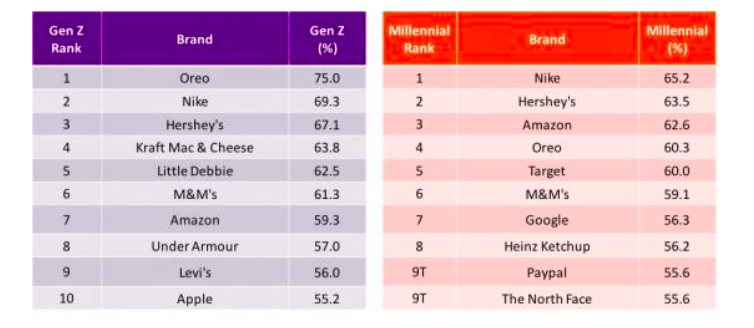
At the same time, 58% of Gen Z doesn’t trust Facebook with their data. It’s less about brands having their data than how they use it. Few companies seem to collect as much consumer data as Amazon and yet, the ecommerce giant is one of the demographic’s most trusted brands, according to Ybrands research from June.
Indifference toward Facebook means Gen Z doesn’t stream much content there. Though it’s popular with marketers, 74% of Gen Z don’t use Facebook Live. The content they do watch live mostly comes from musicians and influencers, rather than brands.
Given how much time younger consumers spend on social media, surprisingly, that’s not their go-to channel for communicating with brands. They prefer email (40%) and even interacting face-to-face in a store (21%).
These figures demonstrate a more traditional view toward marketing than many perceive. While 56% don’t click on display ads, 84% take note of out of home advertising featured in trains, malls and airports.
What’s more, Gen Z overwhelmingly prefers to read print books.
Leave a Reply
You must be logged in to post a comment.