ClickZ sat down with Channing Ferrer, Chief Revenue Officer and CEO Americas at Brevo, to unpack what the most recent BFCM cycle revealed about customer behavior, how mid-market and enterprise teams are rethinking engagement, and why personalization, loyalty and advocacy are set to become serious performance levers over the next five years.
As Brevo celebrates a major funding milestone and sets its sights on reaching 1 billion dollars in annual revenue by 2030, Ferrer is focused on a simple idea: give marketers a unified platform that is easy to use, but deep enough to deliver AI-driven personalization and real loyalty at scale.
The conversation below is adapted from a recent Q&A session between ClickZ and Ferrer, with a focus on what senior marketers need to get right in 2026.
ClickZ: Looking back at Black Friday and Cyber Monday, what stood out to you about how brands approached acquisition, retention, and customer communication?
Channing Ferrer: This year we saw our largest ever volume of email sends as a business. That alone tells you there is still a very strong desire to engage directly with customers through owned channels, with Black Friday and Cyber Monday email volumes rising 23 percent year over year.
The more interesting shift was around how that engagement is happening. Personalization was a very clear theme. Our users are not just sending broad, general messages. They want to create tailored experiences for their buyers and consumers, and they are doing that across multiple channels. That shift showed up clearly during BFCM, with SMS volumes increasing 30 percent year over year and WhatsApp volumes rising 76 percent year over year.
So it is not only more volume. It is more personalized volume, delivered in the channels customers actually prefer to use.
The second big theme was loyalty. Many of our customers went back to people who had already bought from them and focused on driving that next purchase. It was not just about net new acquisition but about re-engagement and increasing multi purchase behavior from existing customers.
ClickZ: Brevo has just announced a major funding milestone and new investors. How is that shaping the conversations you are having with customers about what they need from a modern customer engagement platform?
Ferrer: First, we are very excited about the investment and the growth opportunity it unlocks for us at Brevo. What we are hearing from customers is very consistent.
They want a unified solution that is simple to deploy and simple to use, but that still has very deep, robust capabilities. They do not have time to spend months learning a new platform. At the same time, they need serious functionality and serious AI to compete.
That is where we are positioning Brevo. The broader market dynamics are pushing toward three things:
-
Simple experiences for the marketer.
-
Deep, AI driven capabilities under the hood.
-
A clear focus on personalization and loyalty.
E-commerce and customer engagement more broadly are moving in that direction, and those are exactly the areas where customers are asking us to double down.
ClickZ: The US now represents a significant share of Brevo’s growth. What makes the US market so critical for you, and where are you seeing the fastest acceleration in demand?
Ferrer: The US currently represents 24 percent of our business and it is one of our fastest growing markets globally.
What is interesting is that the growth is broad based. It is coming from our self serve customers who buy our simpler product tiers and from our mid market and enterprise customers who use the platform in a more sophisticated way.
In terms of industries, a few stand out. Professional services is a big one, and that includes a lot of marketing agencies. They are using Brevo on behalf of many other companies, so there is a multiplier effect there.
We also see strong growth from what we call “bricks and clicks” businesses. These are companies that blend online ecommerce and in person, in store experiences. They need to connect those worlds in a single customer engagement strategy, and that maps very well to what we do.
ClickZ: You mentioned mid market customers as a fast growing segment. Where do you see the biggest gaps in their customer engagement maturity going into 2026?
Ferrer: Time is the biggest constraint in the mid market.
These teams want a tool that can do a lot, but they do not have the time or resources for a long implementation or a steep learning curve. So the first gap is in solutions that are both highly capable and easy to operate day to day.
The second gap is in data management. Historically, if you wanted deep data capabilities or CDP-style functionality, it was expensive and complex. Many mid market companies simply could not access it.
At the same time, AI is pushing marketers to automate more of their workflows and create far more personalized, omnichannel experiences. To make that work, you need strong data unification and governance. The question we hear a lot is: “How do I get access to those kinds of personalized tools without going through a huge CDP project?”
That is the gap. They want AI, they want personalization, they want omnichannel customer journeys, but they need that in a way that fits mid market realities on time, budget, and complexity.
ClickZ: You have helped scale organizations like HubSpot. How does Brevo’s unified marketing, sales, and customer communication platform change what a scalable go to market motion looks like for larger businesses?
Ferrer: Ease of use combined with deep capability is the starting point. Marketers do not have time to manage multiple disconnected systems and they do not have time for big projects. But they do need advanced functionality.
The next piece is personalization. A few years ago, personalization meant a bit of website tailoring or a simple email merge field. Today, expectations are much higher. Customers expect experiences that feel very specific to who they are, what they want, and where they are in their journey.
That has to happen across channels. Someone might interact by SMS one day, email the next, and social after that. It all needs to feel coherent and consistent.
Then there is loyalty. We saw it around Black Friday. Our customers are very interested in re selling to people who have already bought from them and turning that into a repeat pattern, not just a one off campaign. That is where long term value gets created.
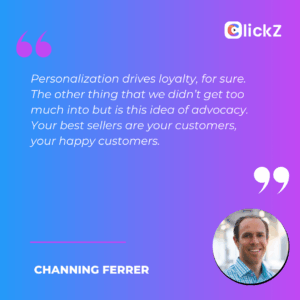
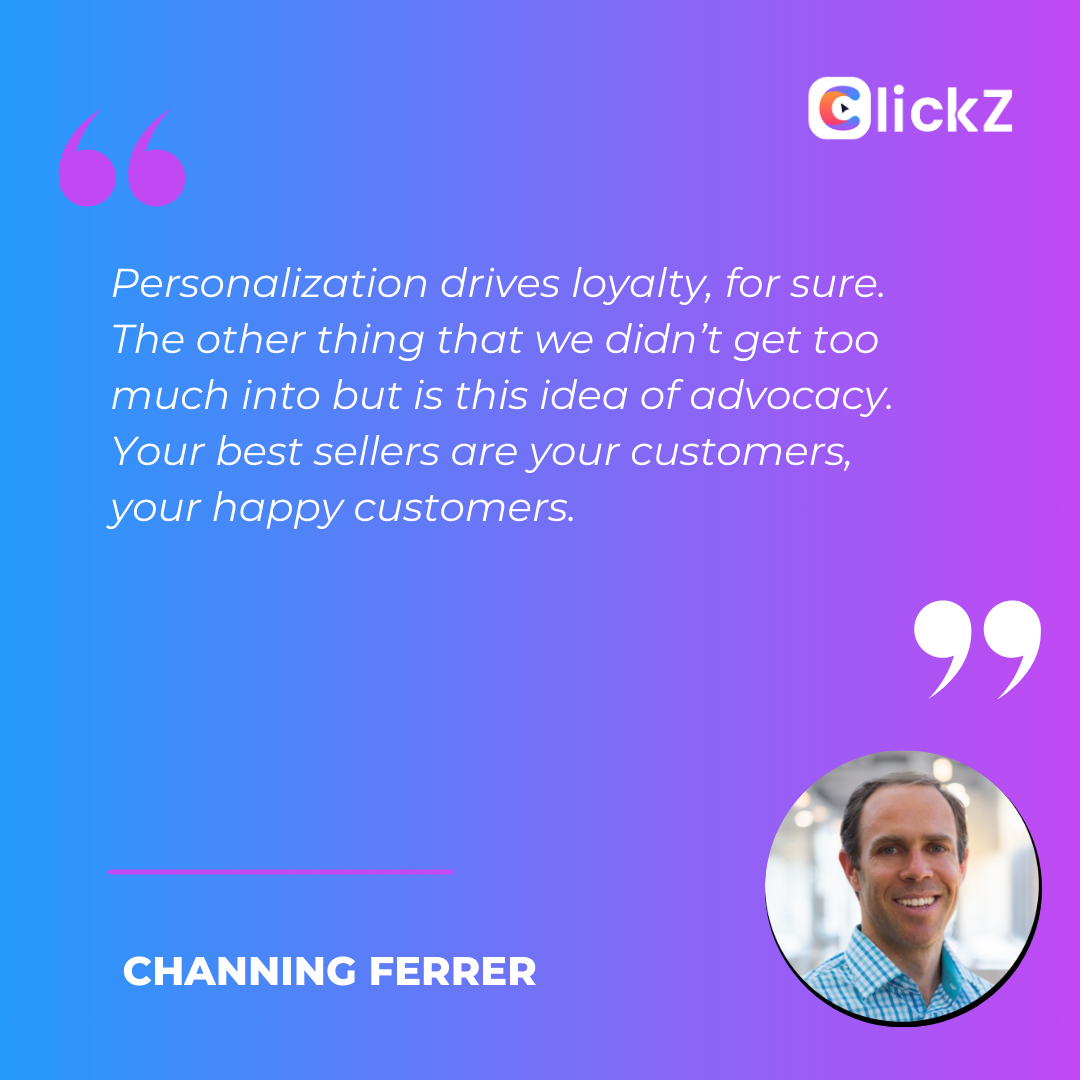
Finally, I would highlight advocacy. If you create a personalized, loyal experience, your best customers can become your best sellers. You can incentivize advocacy so that they talk about you on social, recommend you to their friends, and drive more demand. We see that as an area with a lot of upside.
There is also an interesting evolution in how B2B and B2C go to market models are blending. B2B used to be very human led and narrow, almost purely account based. B2C has long been more automated and broad. With AI and better data management, B2B companies can bring that level of scale to what used to be very targeted motions, without losing personalization.
ClickZ: Let’s stay with that B2B and B2C point. How do you see those models converging in practice?
Ferrer: Historically, B2B marketing and sales were built around a relatively small set of target accounts, with a very human led motion. You might be focused on a few hundred or a few thousand accounts and doing very tailored work for them.
What is changing is that we can now use AI and data to drive that same level of targeting and personalization across tens of thousands of accounts.
So B2B companies are learning from B2C. They are taking the broader reach and automation of B2C, combining it with the depth and specificity of B2B, and doing it at scale.
The key point is that you do not need to water down the message. You can keep it highly personalized. Automation, AI, and better data management are what make that possible.
In the long run, I think we will see a convergence where the best practices of B2B and B2C blend into one approach focused on extreme personalization at scale.
ClickZ: Brevo has completed 11 acquisitions as part of its technology and geographic expansion. From a revenue leader’s perspective, how do you make sure M&A accelerates customer value instead of adding complexity?
Ferrer: We think about M&A in two primary ways, and both are tied directly back to customer value.
The first is geographic expansion. Many of our customers are multinational. If we acquire a company in a new region, we can bring local presence, local language, and local support. That helps those customers execute more effectively in that market.
The second is product expansion. A number of our acquisitions have been very product-oriented. Captain Wallet is a good example. We acquired it to expand our wallet and loyalty capabilities.
What is important there is that we do not just bolt the product on through a light integration. In the case of Captain Wallet, we rebuilt it into the core of Brevo. That took over a year, but the result is a deeply embedded capability instead of a simple connector.
From that foundation, we have been able to build new features like Smart Loyalty and more advanced advocacy capabilities. That is how we think about M&A creating value. It has to either meaningfully expand where we can support customers geographically or materially enhance the core product in a way that customers can feel day to day.
ClickZ: Many leaders are planning 2026 with a lot of uncertainty. How do you personally balance efficiency with long term growth bets?
Ferrer: I always start with metrics. You have to be data driven, but it is not enough to look at historical numbers. You need forward looking indicators as well.
Trending data is very useful here. For example, we might look at email volume trends, opportunity creation trends, or other leading indicators to see whether there is a potential drop off coming. That lets you react earlier.
Our ecosystem is another important signal. Technology partners and marketing partners give us a lot of on the ground insight about what is happening in specific regions and segments.
Geography is a third lens. We categorize markets into Tier 1, Tier 2, and Tier 3. Tier 1 is where we see accelerated growth and where we focus our proactive investments. Tier 2 is more standard growth. Tier 3 is where we are reactive rather than proactive. That discipline prevents us from spreading ourselves too thin.
Finally, on the product side, we never want to place a single bet. We think in terms of multiple S curves. Some initiatives will not work and that is fine, as long as you have several in play. If you only have one big bet and it does not land, you have a real problem. A portfolio of bets gives you more consistent growth over time.

ClickZ: Brevo has set an ambition to reach 1 billion dollars in annual revenue by 2030. Looking at the next four to five years, what strategic bets do you think will define the companies that win in customer engagement?
Ferrer: I would highlight three.
First, AI driven personalization. We are already going down that path, but we are still in the early stages. Right now, humans are making a lot of the key decisions about how to personalize experiences. Not too far from now, we will be more comfortable letting AI make more of those decisions, and in many cases it will do it better than we can manually.
To get that right, you need strong data unification. You cannot have fragmented data and expect AI to deliver great personalization.
Second, loyalty and advocacy. Loyalty is important today, but I think advocacy is the piece that is still underdeveloped. The question is: how do you get your best customers to become advocates for your business, especially in social environments where influence matters so much. That is an area where we see a lot of future growth.
Third, the blending of B2B and B2C models. Some vendors position as purely B2B. Others position as purely B2C. I think those lines are going to blur. The future is extreme personalization delivered at mass scale, and that is effectively the combination of B2B depth and B2C breadth.
Those three themes together are what I see shaping the next phase of customer engagement.
ClickZ will continue to spotlight leaders who are actively shaping the next wave of growth in customer engagement. For senior marketers, the message from Brevo’s Channing Ferrer is clear: the advantage will sit with brands that can unify their data, operationalize AI driven personalization, and turn loyal customers into active advocates.

Leave a Reply
You must be logged in to post a comment.