5 Steps to Grow a Successful Testing Program
If your company is new to testing, you will need to be the testing champion within your organization. Here's how.
If your company is new to testing, you will need to be the testing champion within your organization. Here's how.
In Testing, Testing 1-2-3-4-5, I shared why and how to start testing. After a few successful tests, you should have enough momentum to justify an optimization program. However, growing and maintaining a testing program brings on another set of challenges that we often see.
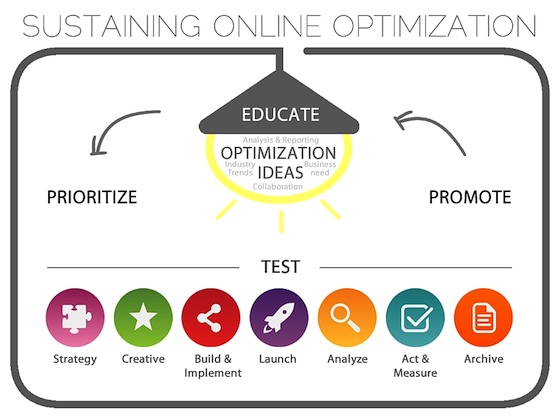
5 steps to grow a successful testing program
1. Form a testing culture: If your company is new to testing, you will need to be the testing champion within your organization. You can’t go it alone when it comes to testing so educate, promote, and share in the success of tests to gain support from colleagues. Be sure to include these steps as part of your overall process!
2. Build scalable processes and resources: More often than not, we see companies that are eager to engage in testing, but don’t have the dedicated resources. This is one of the quickest ways to cause a program to fail. Remember, no matter how many good ideas you come up with, if you can’t execute them then they are pointless. Luckily, you can outsource part of, or even the whole, process to companies that specialize in testing.
3. Create a process for idea generation: Once you have tackled the major usability or user experience issues, you will need to find a way to continually tap into visitor behavior and site performance. Have a clear schedule of the different datasets you will look at and stakeholders you plan to meet with. With that said, remember to be flexible! Often one test can lead to another so, in our experience, having a rigid testing schedule never works.
4. Prioritize test ideas: Once stakeholders see the value in testing, it is common to be flooded with lots of test ideas or requests. This is when the technical vetting and projections become even more important. To make the best use of resources, develop a weighted list or scorecard to help you assess potential ROI.
5. Archive your insights: After each test, you should be syndicating results whenever possible and measuring the impact. But as your company or testing program grows, you will need to accurately document efforts and make them accessible throughout the organization. Creating a testing repository will help prevent your organization from repeating tests and give them direct access to previous insights that might inform their current challenges.
As the capabilities of testing platforms evolve to handle more channels and data, optimization programs will become increasingly complex but a necessary part of a company’s digital marketing efforts. So get started now before you’re left behind!
Has your organization conducted any tests, and if so what challenges are you finding that you consistently face?
Leave a Reply
You must be logged in to post a comment.