How does John Lewis use its social channels?
What are the different audiences for each of John Lewis’ fast-growing social channels, and how does the retailer appeal to them?
What are the different audiences for each of John Lewis’ fast-growing social channels, and how does the retailer appeal to them?
What are the different audiences for each of John Lewis’ fast-growing social channels, and how does the retailer appeal to them?
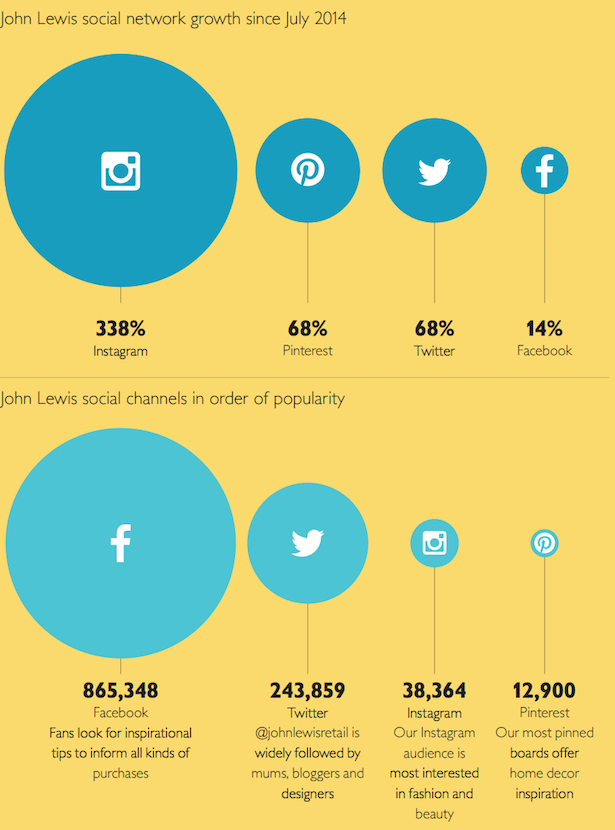
In this chart from its recent Retail Report, John Lewis mentions the different types of audience it appeals to and the content it uses across its social channels.
So we have home decor on Pinterest, fashin and beauty on Instagram, and so on.
In this article, I’ll look deeper into how John Lewis uses each channel.
According to John Lewis’ 2015 retail report (which we dissected last week) Facebook is the brand’s most popular channel, made up of an audience who are looking for inspirational tips to inform their purchases.
To cater this Facebook audience, John Lewis posts a large amount of video content that has been created especially for the channel, documenting tips from lifestyle bloggers, opinions from their own customers, or promoting new products.
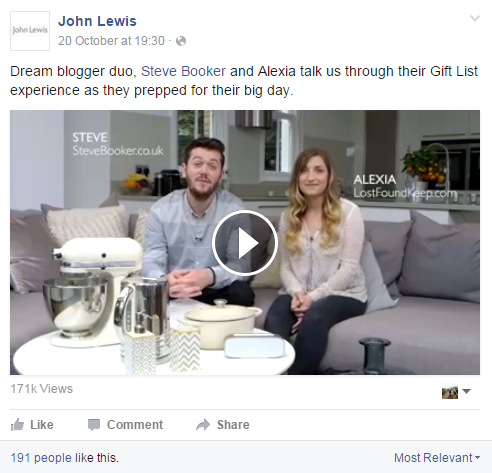
Take this gift list video, for example. The video is automatically played on user feeds, and is accompanied by a link to the John Lewis site, where Facebookers can find the gift list being discussed.
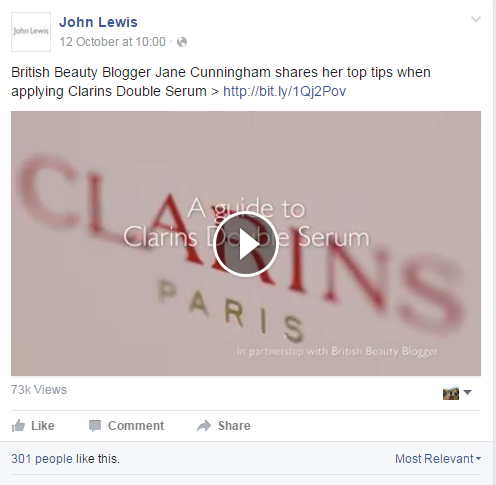
‘Top tips’ videos are also pretty prominent – it’s shareable and engaging content, because it is useful for readers.
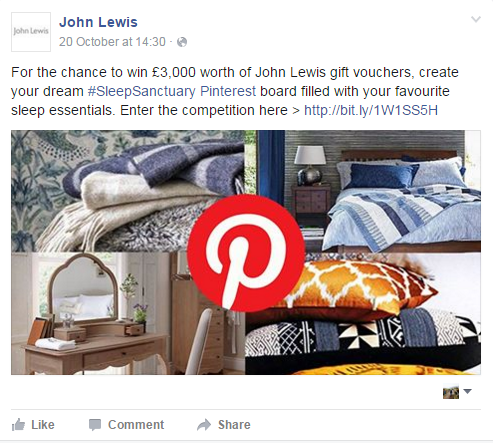
Sprinkled through tailored useful video content are links to John Lewis promotions. Competitions like the #SleepSanctuary promotion, pictured above, are really useful because they’re heavily engaging.
John Lewis’ Twitter account comes second in the brand’s popularity chart, and is widely followed by mums, bloggers, and designers.
It’s purpose is different to Facebook, and you can tell this by the kinds of content the channel produces. Unlike Facebook, the John Lewis twitter account shows a bit more personality, posting content that is unrelated to John Lewis itself – memes and so on:

There is a real mix of content on the John Lewis twitter, promoting all categories of product within the business. The format of tweets are usually an image (of a product or promotion) and a link.
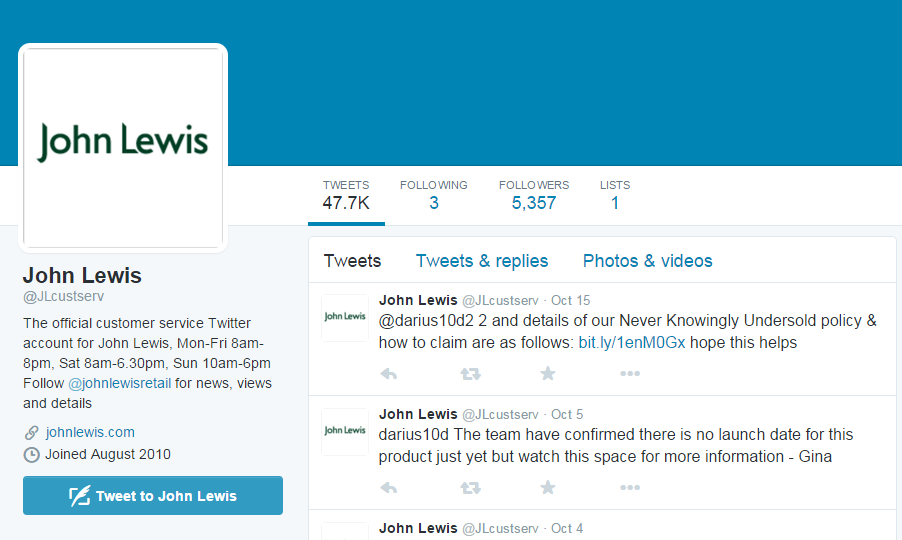
There isn’t a huge amount of interaction with customers, but the brand does have a separate customer service account that deals with enquiries and adopts its own tone of voice. Annoyingly, there is no link to this account on John Lewis’ main Twitter page.
Unlike John Lewis’ Twitter and Facebook, the company’s Instagram audience is mostly interested in fashion and beauty.
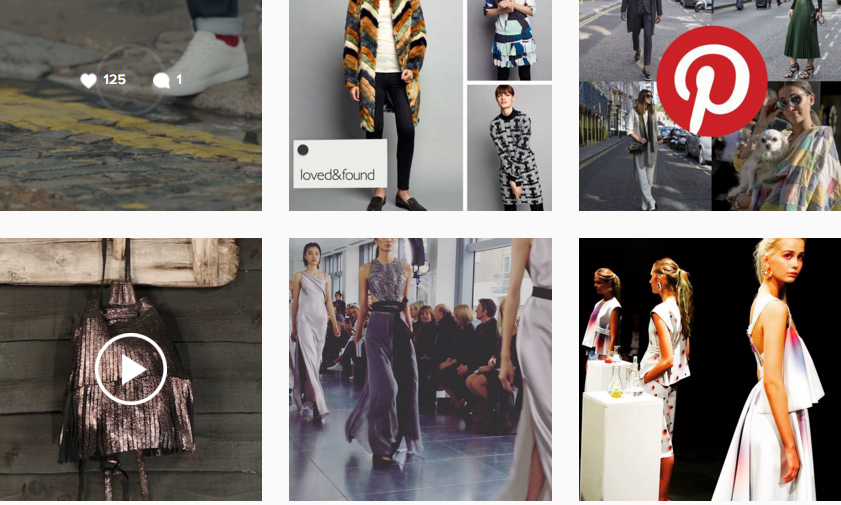
This means behind-the-scenes photoshoot images, and sneak-previews of John Lewis clothes on the catwalk. The Instagram account is a little higher-brow than the other social channels – it’s pretty polished and expertly curated.
The bog-standard John Lewis products aren’t showcased, it’s the premium products that are featured on this channel to cater to the fashion-loving audience scrolling through their feeds.

John Lewis’ Pinterest subscribers are a largely female demographic (80% of Pinterest users are women), who follow boards that offer home decor and inspiration. It’s the only social channel to emphasise this aspect of the business, and does so to cater to its audience.
The channel is a massive player in ecommerce. Pinterest’s share of referrals is highest in home and furnishings, accounting for up to 60% of all social traffic, so the brand so it showcases specific products in lookbook-type boards, that users can click-through to buy.
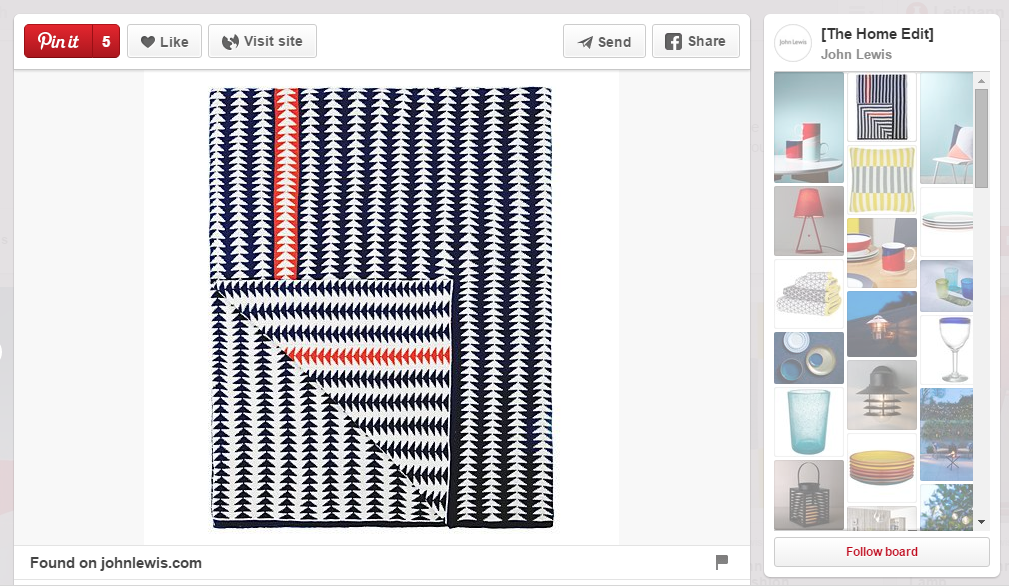
This is a purely visual channel, so it differs from Facebook and Twitter in this way it presents content, and doesn’t emphasise fashion in the same way its Instagram account does (although there are fashion boards, they aren’t as prominent as homeware).
Leave a Reply
You must be logged in to post a comment.