How ecommerce sites can use how-to guides for content marketing
How-to guides, buyer’s guides and other practical content can be a very effective marketing tactic for online retailers, if used well.
In this post I’ll show you some examples from ecommerce sites and how effective they can be.
By this I mean content on retail websites which offers useful advice and help for potential customers.
This could be help selecting the right product, finding the right fit for clothing, or practical advice on how to fix something.
This content works in on and off site:
There are a number of reasons…
Repair Clinic creates some very useful content related to its products. It sells spare parts, so creating content which deals with common appliance problems is perfect.
The customers it’s looking to appeal to will have problems with appliances, so this is a perfect fit.
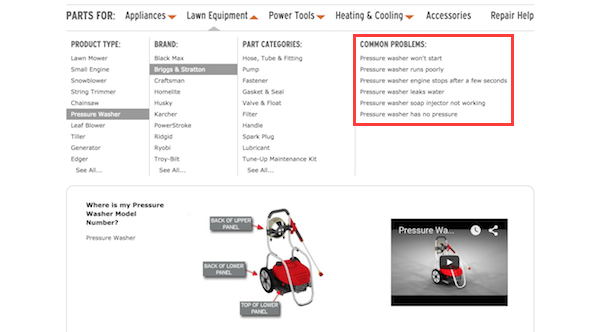
The attention to detail is impressive. For example, it has incorporated common problems related to products in its navigation.
This is useful for customers, and it helps the retailer to target the search terms people are likely to use.
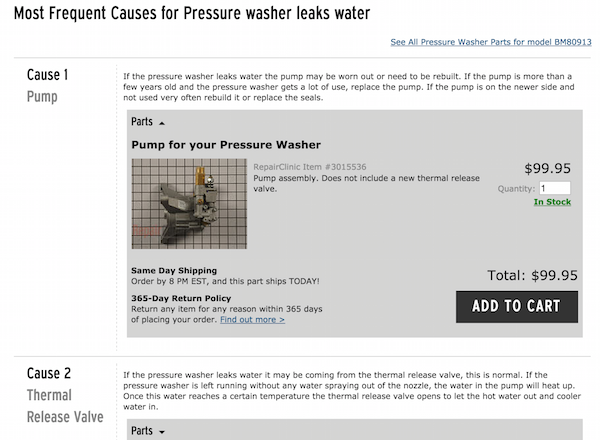
This extends to Repair Clinic’s site search. While many sites only serve up results for products, Repair Clinic shows common problems and video results.
I’d guess that the retailer will also be using its site search data to learn and improve the results suggested and terminology it uses.

The ‘problem solving’ pages provide useful help for visitors and lead customers to product pages for the parts needed to solve visitors’ issues.
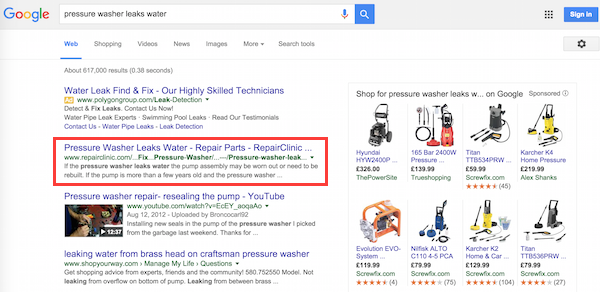
It’s great for SEO too. Try entering some of the common problems into Google, and Repair Clinic’s results are often in the first few positions.
For example, here are the results for ‘pressure washer leaks water’:
eSpares has a dedicated advice centre, dealing with similar issues to those of Repair Clinic.
Its focus on video guides has paid off in terms of search results:
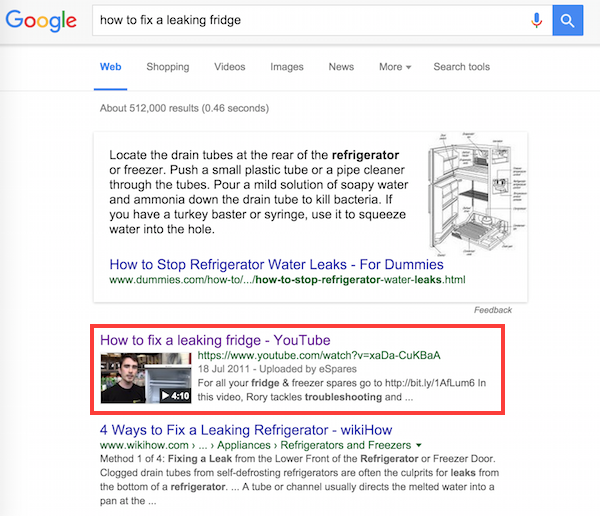
This video content also gives the brand a presence on YouTube, where it has amassed more than 25m views of its videos.
It doesn’t sell too hard, but instead concentrates on providing useful advice.
However, the links are there for viewers that need parts. It also helps to establish the brand as a go-to destination for such advice.

DIY is another obvious area for content which provides practical advice, and Home Depot provides a good example of how this can work.
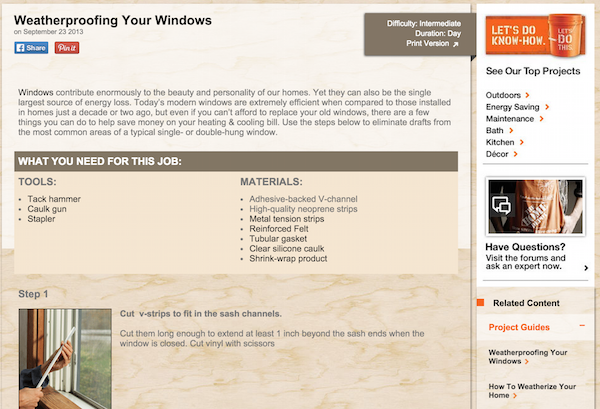
A search around weatherproofing windows generally brings up publishers, blogs and DIY advice sites.
However, Home Depot has managed to rank here thanks to the content it has produced around the issue.

This leads to a page with some useful tips on weatherproofing, as well as a list of tools and materials which are needed for the task, which can be bought on Home Depot.
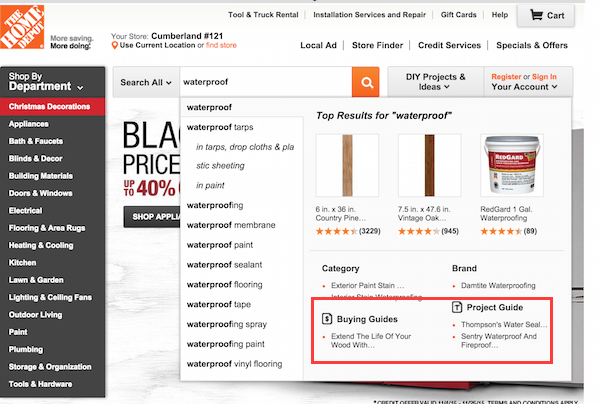
It also, like Repair Clinic uses autocomplete on its site search and serves up buyers guides and other advice for searchers. This makes the site a destination for advice as well as products.
There’s an obvious content fit for the sites already mentioned, but this approach can work in other sectors.
For example, Nordstrom has a suit fitting guide, providing some useful advice for potential customers.
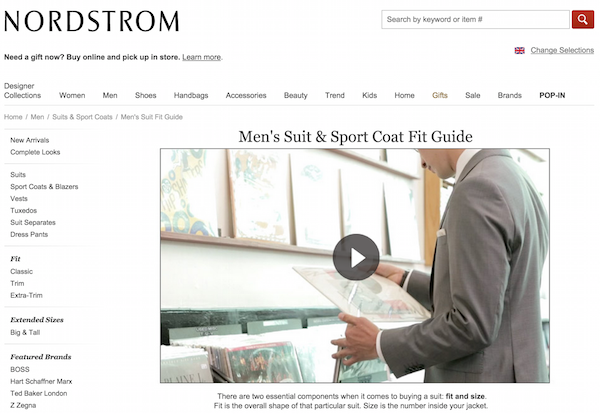
The beauty of this content is that it also helps customers to find a product that suits them (no pun intended).
It therefore helps to drive sales, and also ensures that, if customers can find the best fit, then returns are minimised.

It also works in for search:
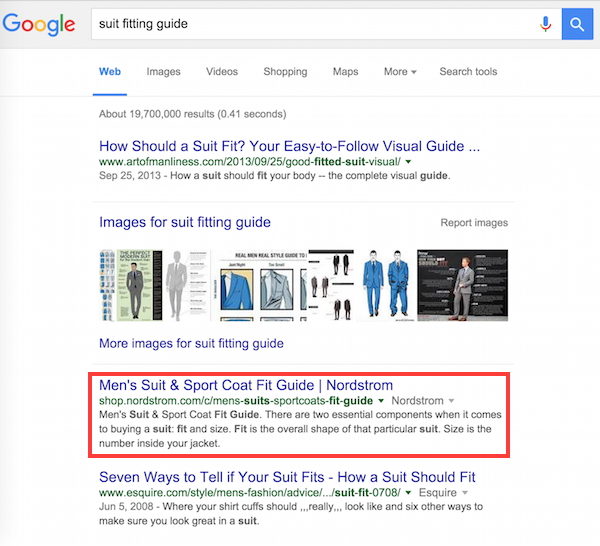
Practical, helpful content is a great way to help customers and improve search rankings at the same time.
It may take some expertise and an investment in staff and resources to produce it, but it can pay off in a big way when executed well.
This kind of content often exists elsewhere, on blogs and publishers’ sites, especially content around technical products like spare parts and DIY equipment.
So, rather than having customers find these resources elsewhere, it makes a lot of sense to provide them on-site where you can provide links to related products and improve brand sentiment and recognition with your target customers.
The SEO value may well be worth it alone. This content helps sites like eSpares capture a lot of long tail traffic which is highly relevant to their products and services.
For more information on ecommerce and other topics, including guides on mobile commerce, customer experience, and social customer service, head to ClickZ Intelligence.
Leave a Reply
You must be logged in to post a comment.