Klaviyo's James White on Why Retention Beats Discounting
Most eCommerce brands still put the bulk of their marketing budget into finding new customers. Yet the customers already on their list would often cost far less to keep. James White, senior director of partnerships EMEA at Klaviyo, spoke to ClickZ about why that balance is so hard to shift. He also explained what changes once a brand stops treating retention as an afterthought.
White’s starting point is that paid advertising outsources the hard part of marketing. A platform builds the audience and hands over new customers for a fee. Running a brand’s own channels means pulling together data, building flows and deciding what to send and when. Klaviyo’s aim is to make that second option as straightforward as the first. “As a CRM working with 200,000 consumer brands globally, we make it easy for brands to pull that data together and deliver seamless experiences to customers on their channels.” He added that this approach is significantly more cost-effective than paid acquisition.
Klaviyo’s MCP server links its data to tools such as Claude. It has been running for several quarters and recently gained more write functions. Marketers can now use it to build campaigns as well as pull data. White compared it to plugging an assistant directly into the tools that do the work. “By connecting with Klaviyo MCP, or your Asana, you can build an amazing workflow where you barely have to touch the tool itself.” But you’re still taking advantage of the dataset you’ve built within Klaviyo, he said. Agency partners have been posting on LinkedIn about audits and campaign builds they now run through Claude connected to Klaviyo, he said.
White was asked what separates brands that build retention into how they operate from those that treat it as a campaign tactic. He pointed to a UK-based online wellness marketplace Healf. Rather than opening with a product menu, the brand’s site asks visitors about themselves first. “It’s not a landing page with brands or products, or even what’s your ailment. It’s actually tell us about you. It’s just a chat box, and it starts there.”
White used his wife’s experience with the brand’s sleep products as an example. She engages with nearly every email, he said, because the offers arrive when she is close to running out of magnesium or mouth tape. That timing beats a generic discount code.
White also raised Paul Smith’s stamp based loyalty programme, run instore alongside its email marketing, as a case of low-cost retention done well. “Paul Smith have got a loyalty campaign with physical stamps that you go and buy in store.” He added that they articulate it well in their retention marketing, which is a low-cost channel for them. He noted that authenticity of that kind is difficult for a competitor to reproduce once a brand has built it. It depends on customers already being engaged enough to visit a store in person and collect stamps.
Pressed for a retention metric brands should track but usually do not, White chose margin contribution. He picked it over more familiar measures such as lifetime value or return on spend. “A lot of people focus on lifetime value, and return on spend is obviously good.” But most businesses are in the market to make some kind of profit and grow their business, he said. He argued that comparing customers who only respond to discounts with those who buy at full price shows a brand where its real profitability sits. That matters more than revenue alone.
White would not choose acquisition or retention outright, arguing the right split depends on how established a brand already is. A business a week old has no customer base to retain, so acquisition has to come first. A brand with ten million subscribers holds a large amount of value in a list it may not be using well. His broader point was that acquisition spend without a retention plan behind it does little for a brand long term.
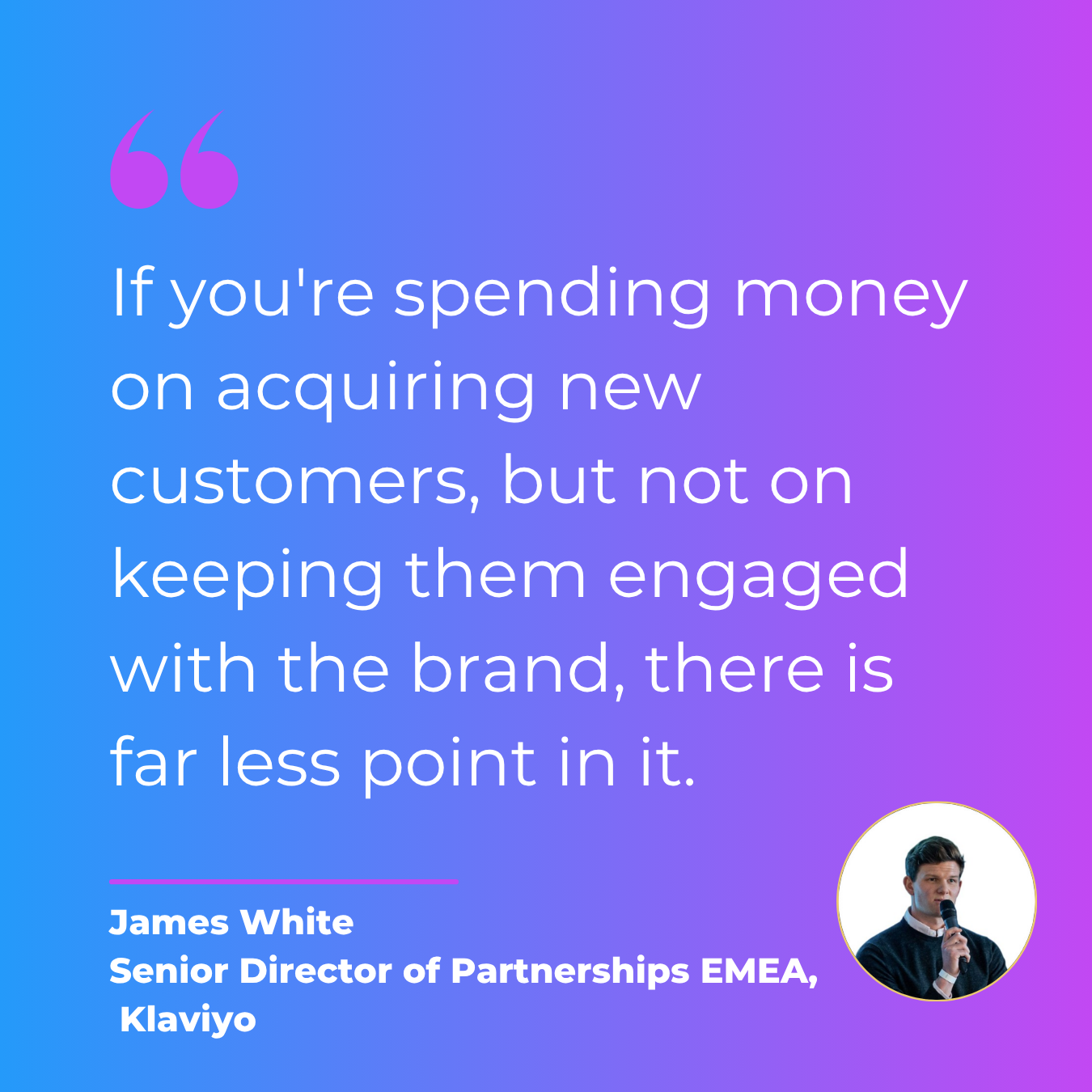
“If you’re spending money on acquiring new customers, but not on keeping them engaged with the brand, there is far less point in it.”
The thread running through White’s answers is that AI has made retention cheaper to run than it used to be. That changes a calculation brands have relied on for years. Brands will answer whether the change is real with where they put next quarter’s budget.

Leave a Reply
You must be logged in to post a comment.