On D2C digital ad spend, Google and Facebook still beat Amazon
New ecommerce study from March/April 2019 reveals that about 50% of respondents plan to increase investment in Facebook Ads and Google Ads compared to just 18% who plan to increase spend on Amazon Ads this year versus last year.
The survey, which was conducted with over 500 ecommerce and marketing professionals in March and April of 2019, reveals that about 50% of respondents plan to increase investment in Facebook and Google Ads compared to just 18% who plan to increase spend on Amazon Ads in 2019 versus 2018.
Amazon Ads even lagged behind “social media influencers” as an acquisition channel, with 36% of respondents indicating they planned to increase spend with influencers this year.
Digital Ad Spend—Image Source: Yotpo
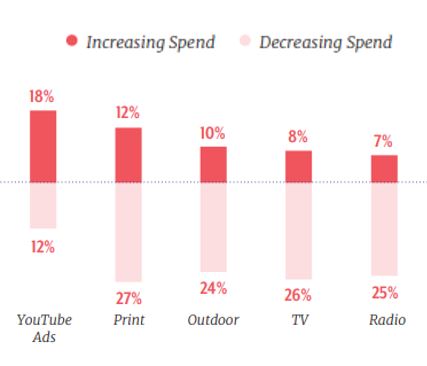
The increase in digital spending comes at a cost for offline channels, with many respondents indicating they plan to spend less on print, outdoor, TV, and radio in 2019 versus 2018.
Digital Ad Spend—Image Source: Yotpo
D2C embraces user-generated content
User-generated content (UGC) is poised to see strong growth this year, with more than 70% of respondents indicating they’ve already implemented some type of UGC program and 20% planning to implement it.
UGC includes content that is created by consumers such as reviews, photos, and videos.
Brands incorporate UGC content in a variety of ways including in social media (66%), Email (41%) and digital ads (20%).
How Brands Leverage User-Generated Content—Image Source: Yotpo
Breakdown of marketing investment by company size
The Yotpo survey looked at how a D2C company’s size impacted their marketing investment. Size is defined by revenue as follows:
Small: $5 million or less
Medium: $6 – $100 million
Large: More than $100 million
All companies, large and small, focused on three main KPIs when evaluating the effectiveness of their digital initiatives. The top three KPIs that companies use to measure success are ecommerce sales, new customers, and conversion rates.
Small brands showed a clear preference for Facebook and Instagram, with roughly 50% of respondents indicating they plan to increase spend on these platforms (versus 15% who indicated they planned to spend more on Amazon).
Small Brands Marketing Channel Investment—Image Source: Yotpo
Medium-sized companies showed a clear preference for Google Ads, with 60% of respondents indicating they planned to spend more compared with 47% for the industry overall. Respondents also plan to spend more on Facebook (55%) and Instagram (42%) as well as Google Shopping (42%).
Medium Brands Marketing Channel Investment—Image Source: Yotpo
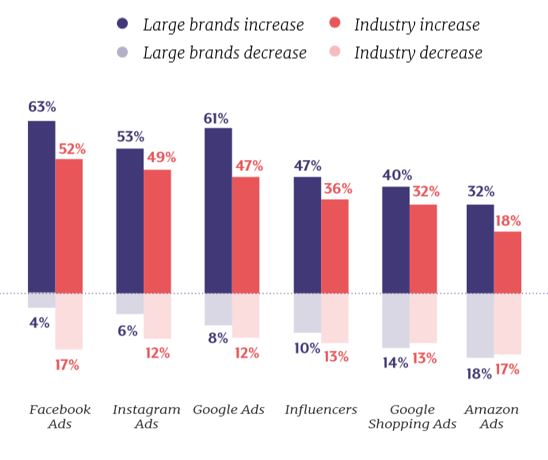
Large brands tend to have the most money to spend on all media, so it’s no surprise that a larger percentage of respondents indicated they planned to spend more on just about every digital channel than the industry average.
As with small and medium-sized brands, Google and Facebook were the clear winners, with more than 60% of respondents indicating they planned to spend more on Google Search and Google Shopping, and over 53% planning to spend more on Facebook.
Large brands were also more likely than small and medium brands to increase spend on Amazon, with 32% of respondents indicating they plan to invest more on this platform (compared with 18% for the industry as a whole).
Large Brands Marketing Channel Investment—Image Source: Yotpo
A closer look at Amazon
While Amazon is the clear loser in this study compared with Facebook and Google, the Yotpo survey revealed that planned spend fluctuated depending on the industry.
About a quarter of respondents in three industries: Automotive, Electronics & Telecom, and Sports & Outdoors, indicated they plan to spend more on Amazon this year. The other extreme is Entertainment, with only 3% of respondents in this industry planning to increase spend on Amazon while 12% planning to spend less.
Amazon Investment by Vertical—Image Source: Yotpo
The Yotpo survey was conducted in partnership with Magento and respondents included a global audience of D2C marketers that use a variety of ecommerce platforms.
The Merkle B2B 2023 Superpowers Index outlines what drives competitive advantage within the business culture and subcultures that are critical to succ...
Making forecasts and predictions in such a rapidly changing marketing ecosystem is a challenge. Yet, as concerns grow around a looming recession and b...
These newcomers in the landscape of paid social channels, are engaging exceptionally well with new audiences, forcing marketers to understand their pr...
Google, LinkedIn, Facebook – which B2B ad platforms should be on every mark...
4y
Rachael King
Google, LinkedIn, Facebook – which B2B ad platform...
While building brand awareness is the primary goal, how can B2B marketers choose the best ad platforms to surface ads and maximize investment? Read Mo...
How marketers can use weather data as a strategic tailwind
4y
Lauren Lee
How marketers can use weather data as a strategic ...
The solution is literally all around us, here's how you can mitigate risk, align messaging, reduce media spend wastage, and drive growth - all while b...
New data sets will help marketers break their cookie addiction
4y
Jeremy Hlavacek
New data sets will help marketers break their cook...
Here's how AI and alternative sources can make brands and marketers stop worrying about the eventual crumbling and focus on delivering value Read More...
A contingency plan for the inevitable cookie death
5y
Jeremy Hlavacek
A contingency plan for the inevitable cookie death
Google’s decision to kill Chrome's third-party cookies shifted to 2023 but that should not lull digital advertisers and publishers into complacency – ...




Leave a Reply
You must be logged in to post a comment.