Tinder's ads deliver engagement, but are they really effective?
Traditionally, online dating services have generated revenue primarily or exclusively through subscription fees, but Tinder, one of the most popular dating apps among younger generations, isn’t a traditional dating service.
Last year, the company’s CEO, Sean Rad, revealed that ads were a focus for 2016. “There will be a major push on our advertising business next year,” he said, and that push appears to be well under way. But some of the ads Tinder is running are being met with confusion and push back from users.
As detailed by Yahoo Finance’s Daniel Roberts, some of these ads look like legitimate profiles, and are accompanied by Verified icons. But they aren’t real user profiles. Instead, these “branded profile cards” are designed to engage users and then deliver a marketing message.
For example, one branded profile card featured an actress and when Tinder users swiped right to indicate interest, they are sent an automated message encouraging them to see her new movie. “You swiped right. I respect that. Know what’s #RespectableAF? Taking your date to Mike and Dave Need Wedding Dates, in theaters on July 8th,” the message read.
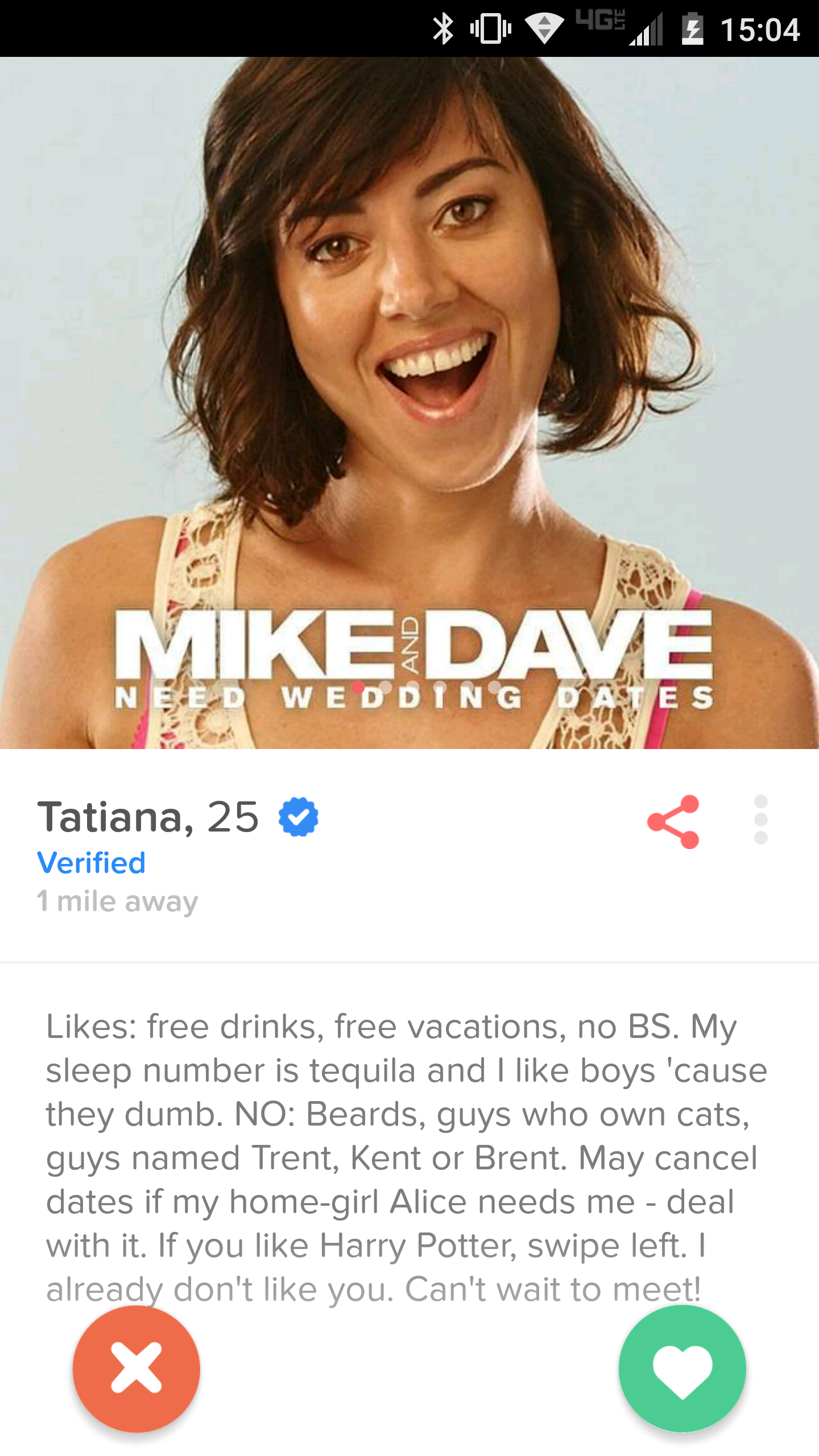
Not surprisingly, some users aren’t impressed. One told Roberts that he “felt a little bit taken” after learning that he wasn’t really matched with the attractive actress.
While such profiles are not new to Tinder – the first appeared two years ago – they do raise questions about the lengths companies are going to engage users with non-traditional ads that are often integrated so well into an app’s user experience that they are not easily identified as ads.
Tinder says it’s trying to “innovate in this space,” but do such ads really represent innovation, or are they merely optimizing engagement without delivering real efficacy?
Based on reactions posted by Tinder users on Reddit, it appears at least some users aren’t responding the way Tinder and its advertisers probably hoped. Some expressed confusion. Others were angry. “Guaranteed way to make me not watch your movie,” one wrote, while others called it “bait and switch” and “spammy.”
While these ads might deliver engagement at a higher rate than traditional ads, doing so in a way that leaves consumers feeling confused or deceived probably is less likely to result in the intended action, begging the question: if they annoy users, will these ads actually pay off for advertisers?
The reactions from Tinder users also beg the question: will these ads be a net negative for Tinder? After all, if users feel that Tinder is selling out users with ads that ruin their user experience, it could drive some of them away.
In other words, even if these kinds of ads are effective at “tricking” users to engage with them, if users don’t like them, they don’t produce real ROI for advertisers, and they harm the Tinder user experience, they could be a losing proposition for everyone involved.
Leave a Reply
You must be logged in to post a comment.