Your Social Media Images Can Now Be Turned Into Facebook Ads
A new ad format enables brands to turn user-generated images into sponsored Facebook posts.
A new ad format enables brands to turn user-generated images into sponsored Facebook posts.
Creating Facebook ads is no longer a daunting task best left to big agencies, as a new offering called Predictive Consumer Generated Facebook Ads enables brands of all sizes to curate user-generated images from Instagram, Twitter, and Vine and then serve them as Facebook ads.
The ad format was introduced by visual marketing platform Olapic.
In order to make sure brands select the customer-created images most likely to drive conversions, Olapic has developed a performance-based algorithm that analyzes details such as who took the picture, how many followers they have, and how many likes or views the post has to date, according to Luis Sanz, the company’s co-founder.
“We put all these things we’ve already collected into a human algorithm. With all the information, we are able to decide which picture performs best [for a brand],” Sanz explains.
Companies often spend a lot of money on display and retargeting ads, but they have difficulty optimizing the creativity of those ads at scale. But Sanz hopes this new ad format can help fix the creativity issue.
In order to leverage user-generated images, brands will have to communicate with consumers directly for permission, and they may award them coupons and promotion codes in return.
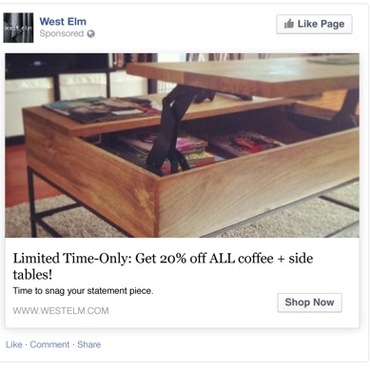
West Elm, an upscale furniture retailer, has begun testing Predictive Consumer Generated Facebook Ads in its #mywestelm campaign.
“Highlighting and surfacing user-generated visual content through our #mywestelm hashtag is a big part of our ongoing conversation with our customers,” says Vanessa Holder, senior vice president and creative director at West Elm. “We love seeing how they are using and living with our products in their homes and we are always looking for new ways to elevate the content they share with us, so testing the user-generated-content (UGC) ad format made a lot of sense.”
Other marketers, such as Holly Robertson, paid social and native strategy lead at agency SOCIALDEVIANT, are interested to experiment with this new offering as well. “I think it’s smart to integrate ads that appear more like content celebrating satisfied customers, which humanizes the brand,” Robertson says.
But the product is not without its potential issues.
“I question the user experience of this new format,” Robertson continues. “Today’s consumers want transparency, and a user-generated photo that links directly to a point of sale on a brand website might feel unexpected or inauthentic.”
Whether this ad format can be appealing without being intrusive remains to be seen. What do you think? Leave your thoughts in the comments below.
Homepage image via Shutterstock.
Leave a Reply
You must be logged in to post a comment.