What OpenAI's New ChatGPT Ad Format Means for Marketers
Ads inside AI assistants are still in their early chapters. The first ChatGPT ads appeared as sponsored cards below an answer, much like the ads that appear around Google search results. A typed question spells out what the person wants, which gives advertisers a clear signal to match.
OpenAI changed the setting on October 5, when it announced a visual ad format. The format appears while people wait for an image they asked ChatGPT to create. Creating an image looks very different from asking a question. The person is making something, so there’s no question for an ad to answer. That raises a fair puzzle for marketers: what makes an ad belong next to a picture someone is still imagining?
In image generation, the prompt describes a scene, so an ad earns its place by how well its picture suits that scene. OpenAI’s own example shows what that looks like.
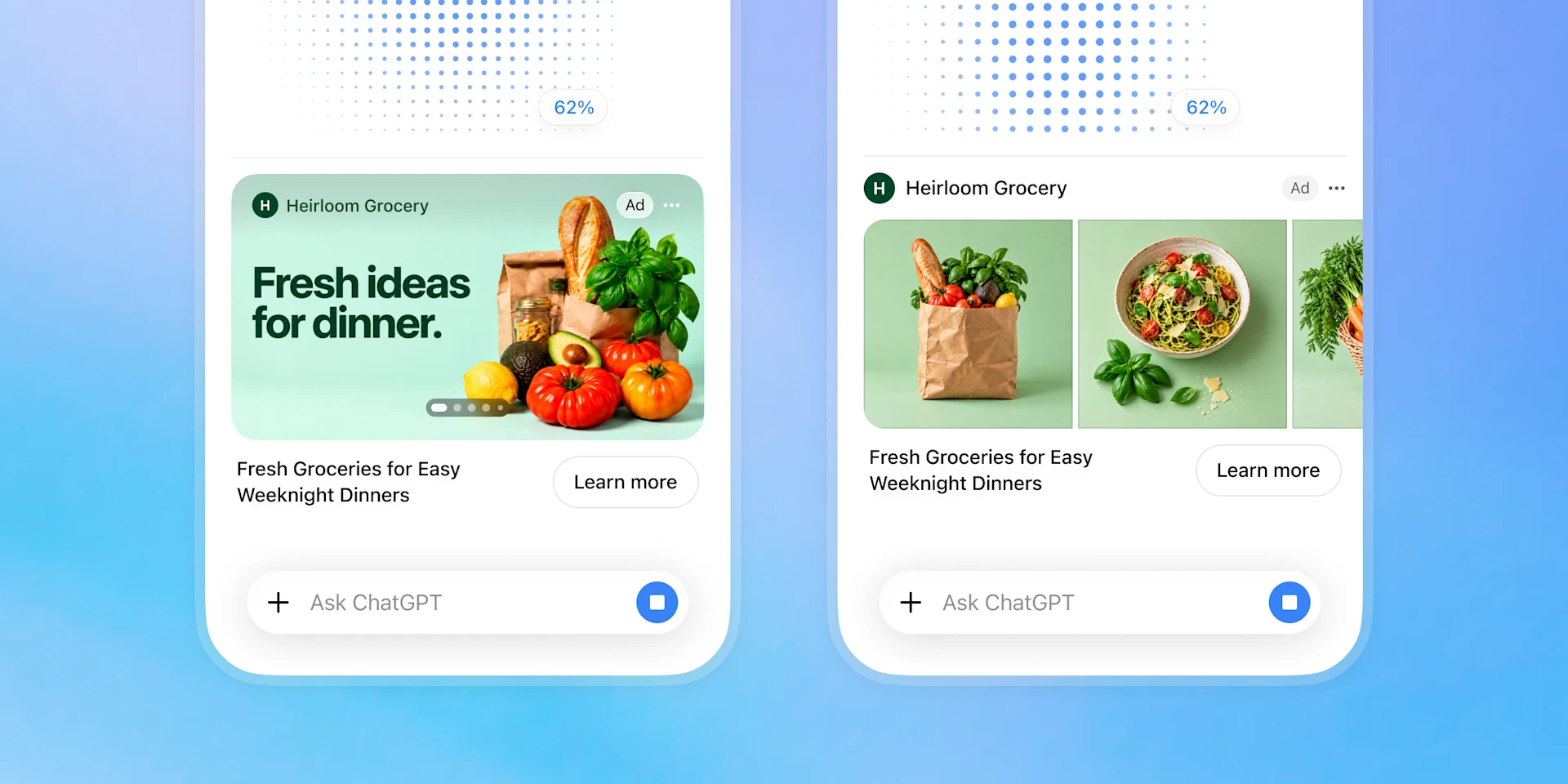
Image: OpenAI’s mock-up of visual ads in ChatGPT. Credit: OpenAI
In the example, a grocery brand’s product images appear on screen while an image generates, with a “Learn more” button. The ads are labeled and kept separate from the picture being created, and OpenAI says they have no influence over the answers ChatGPT gives people.
That leaves the brand one lever, which is the image it chooses to show. A plain product shot on a white background will look like a catalog page dropped into someone’s mood board. Nobody yet knows which images earn attention, which is where the first tests come in.
OpenAI said US testing began in October, and Search Engine Watch has since reported spotting the first visual ad in a live chat. It carried several images and a “Learn more” button. What advertisers learn first will be about creative: which scenes, settings and product styles hold attention while someone is mid-creation.
The way to find out is to run two or three versions of the creative against each other. Each version shows the same product in a different setting. The comparison itself becomes the learning. Change only the setting between versions and keep the product, headline and landing page the same, so any difference traces back to the image.
Take a grocery brand and a person who asks ChatGPT for “a long wooden table set for a family dinner, candles lit.”
What scene did the person just describe? That prompt tells the brand the person is picturing a gathering, a meal and time with others. The scene is the signal, so the brand’s image should start from it.
Does our image belong next to theirs? Beside that dinner table, a photo of a full harvest spread in warm light sits comfortably. It reads as part of the same evening, so the person has a reason to look twice.
What will we count as success? OpenAI’s conversion-optimized campaigns lock in one conversion event, such as a purchase or sign-up, and that choice cannot change once the campaign exists. For the grocery brand, the event is a purchase. That puts a media decision inside the creative brief.
Image-led ads will change how marketing teams plan. Creative briefs will start from the scenes people ask for, and photo shoots will need more lifestyle settings to draw from. Creative teams will plan side by side with media teams from the first brief.
The pace of change matters too. OpenAI went from text cards to images in a single year. Brands with a library of scene-matched images ready will move first each time a new format opens.
Leave a Reply
You must be logged in to post a comment.