New Balance Grew 180% by Doing Less, Not More
Joe Preston’s Shoptalk keynote was not about a growth hack or a new channel but what happens when a brand stops chasing and starts choosing.
Over the past five years, New Balance has delivered more than 180% growth, outpacing the broader sneaker market by a significant margin. That number is striking. What makes it meaningful is where it started.
A few years earlier, the business was not keeping pace with its consumer and performance reflected it. Rather than reacting to trends or chasing short-term fixes, New Balance made a more fundamental move: it went back to basics on who it was, who it served, and what it stood for.
Growth followed. It always does when those questions get answered honestly.
The most important decision New Balance made was defining exactly who the brand was for: a global, independent 18 to 29 year old consumer with a shared mindset, regardless of geography.
That sounds simple. It is not. Most brands either define their audience too broadly to mean anything, or so narrowly they leave growth on the table. New Balance drew a line and held it.
What followed was a compounding effect. With a consistent view of the consumer, every decision across the organization, product design, store environments, brand activations, partnerships, became more aligned. Clarity is a filter. It makes decision-making faster, more consistent, and far more effective over time.
In a market built on promotions, New Balance chose a different path. Pricing set with confidence, inventory managed carefully to avoid oversupply, markdowns avoided not as a tactic but as a principle.
This requires something most brands underestimate: internal belief. When teams are convinced of the long-term direction, short-term pressure becomes easier to navigate without compromising positioning. When they are not, the discounts start and the brand perception follows.
The result is not just higher margins. It is a stronger perception of value in the eyes of the consumer, which is the asset that compounds.
As a 120-year-old brand, New Balance operates at the intersection of heritage and relevance. Preston described how the brand leans into categories where it has authentic authority, particularly performance running, using that as a base to expand into adjacent areas like apparel.
The “dad shoe” moment is the clearest example of this. What many brands would have run from, New Balance reframed as an asset. It drew on the brand’s history and reintroduced it in a way that resonated with a new generation rather than alienating the existing one.
Reinterpreting heritage rather than abandoning it is a harder skill than it looks. New Balance has made it a competitive advantage.
The brands that win long-term are not the ones that reinvent themselves fastest. They are the ones that know what never needed changing.
___________________________________________________________________________________________
Every session at Shoptalk touched on some version of the same problem: customers are discovering products on TikTok, researching on Reddit, browsing on ChatGPT, comparing on Amazon, and converting in store. The journey is more fragmented than it has ever been, and the measurement tools most brands rely on were built for a simpler world.
Last-click attribution, still the default reporting model for many teams, systematically undervalues the channels that create demand in the first place. When a customer sees a brand on a YouTube creator’s video, discusses it in a Reddit thread, and then searches on Google two weeks later, last-click gives all the credit to that final search. The upper-funnel activity that actually built the intent gets zero recognition. Fospha’s data shows this undervaluation averages over 90% for awareness and consideration channels.
The result is a structural bias that quietly starves the channels responsible for growth. Brands end up over-investing in demand capture at the bottom of the funnel while under-investing in the demand creation that feeds it. The numbers tell the story: brands using Fospha’s full-funnel measurement achieve 30% higher ROAS than the market average. When Amazon halo effects are included, showing how paid social and video drive marketplace sales that siloed tools miss entirely, brands see an average 37% ROAS uplift.
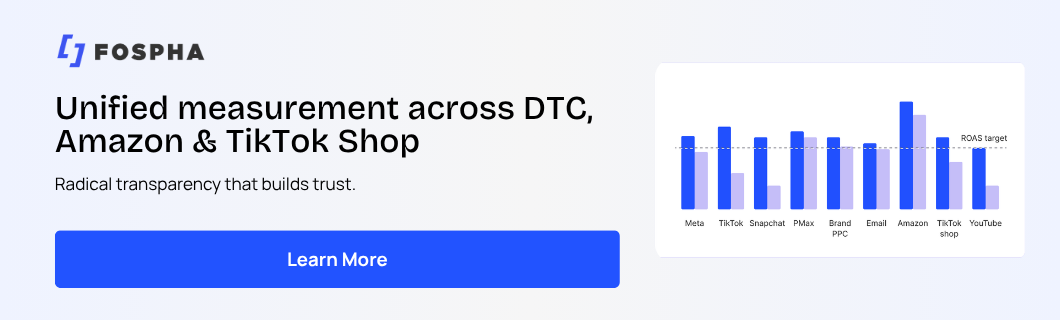
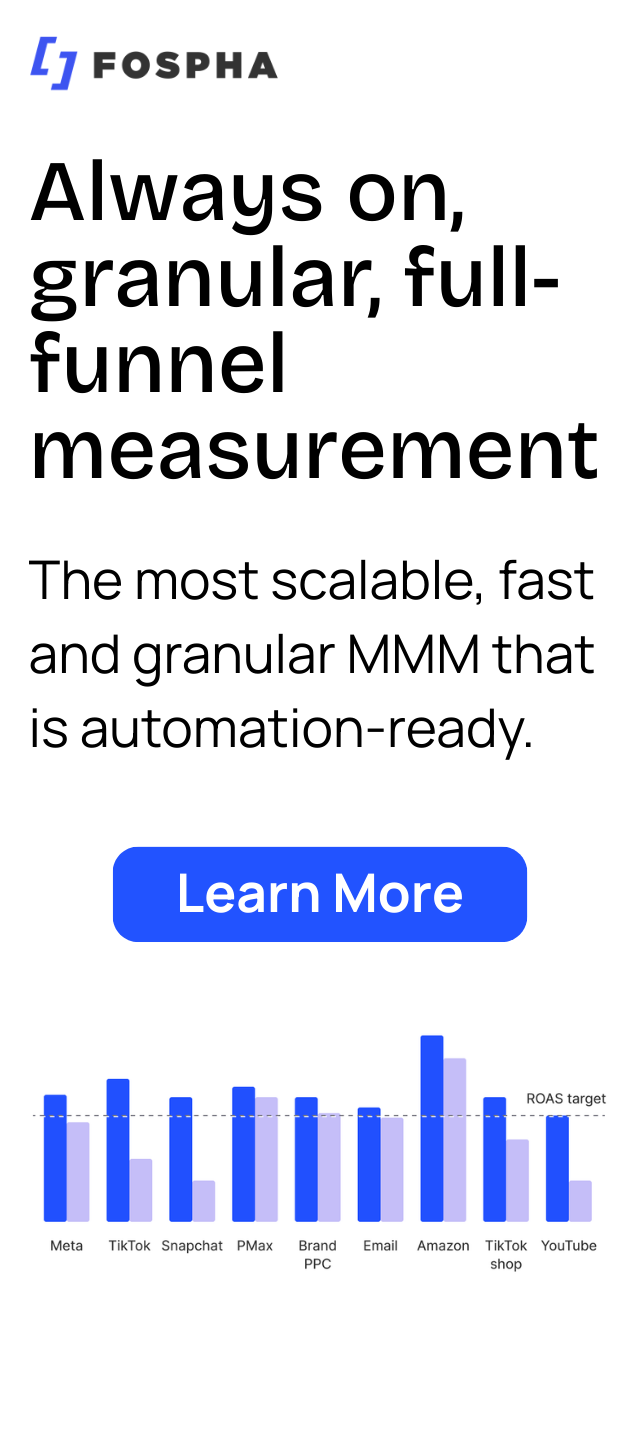
Fospha’s always-on Media Mix Model measures full-funnel impact across every channel, from DTC to Amazon to TikTok Shop and beyond, updated daily at the ad level. In a world where the customer journey looks like the one Shoptalk just spent three days describing, that kind of unified view is the difference between scaling with confidence and scaling on assumption.
Learn more at fospha.com
Rather than committing fully to either direct-to-consumer or wholesale, New Balance maintained a hybrid model. Wholesale partners provide reach, localization, and expertise. Owned retail and digital channels allow the brand to control its expression where it matters most.
The strategy is not about choosing one over the other. It is about understanding the role each plays within the broader ecosystem and meeting consumers where they choose to shop.
As other brands reassess aggressive shifts toward DTC, this balance is looking increasingly like the right call.
New Balance is doubling down on physical retail while parts of the industry continue to question its role. Significant investment has gone into flagship locations in London, Tokyo, Boston, and New York, designed not just to drive sales but to express the brand in its best possible form.
The logic is straightforward. When the brand controls the environment, it controls the experience. And that benchmark becomes the standard wholesale partners are measured against.
Physical retail, in this framing, is not a channel in decline, but a strategic asset that sets the ceiling for how the brand is perceived everywhere else.
New Balance’s collaborations, spanning elite athletes and global artists including Rosalia, share a common principle. Many originate from individuals who already had a relationship with the brand. The result feels natural rather than transactional, because it is.
As the brand has grown, this approach has created a compounding effect. Strong partnerships reinforce perception, which attracts more culturally relevant collaborators. Credibility attracts credibility.
The emphasis is less on visibility and more on fit. That distinction is everything.
Leave a Reply
You must be logged in to post a comment.