U.S. Users Opposed to Behavioral Targeting, Gallup Poll Suggests
Two thirds of respondents say behavioral ad targeting is unjustified, even if it enables websites to provide them with free content.
Two thirds of respondents say behavioral ad targeting is unjustified, even if it enables websites to provide them with free content.
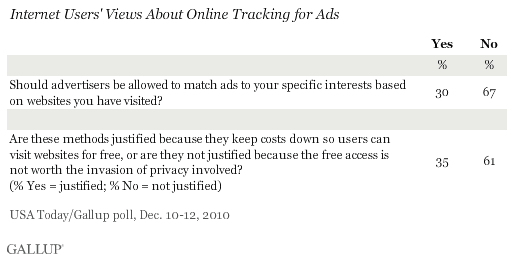
Internet users in the U.S. are largely opposed to behaviorally targeted ads, according to a recent poll conducted by Gallup and USA Today. In addition, the research found most respondents deemed the practice unjustified even if it enables them to access content and services for free.
The survey, which polled 850 random U.S. citizens by telephone over a three-day period commencing December 10th, concluded that 67 percent of respondents believe advertisers “should not be allowed to match ads to their specific interests based on websites they have visited.” Meanwhile, 61 percent said behaviorally targeted ads are “not justified” even if they “keep costs down so users can visit websites for free.”
Additionally, 61 percent of Internet users Gallup surveyed reported seeing behaviorally targeted ads. And 90 percent claimed to pay “not much attention / none at all” to online ads.
In a press release announcing the research, Gallup framed its findings in the context of the FTC’s recent calls for a “Do Not Track” mechanism, suggesting “U.S. Internet users would likely welcome a ‘Do Not Track’ measure.”
Though the findings offer insight into consumer attitudes and sentiment towards the practice, the survey did not explore the actual choices consumers might make around it. For example, respondents were not asked if they would opt out of behaviorally targeted ads at the expense of being able to access free online services. Some observers have suggested online publishers should cut off content to users that reject ad targeting to demonstrate the value exchange to consumers.
The results also appear to contradict recent claims by Better Advertising – a company that offers consumers the ability to opt out of behaviorally targeted ads. It found a tiny fraction of Web users opted out following the initial rollout of its system. The firm’s technology appends a small icon to online ad units; that icon gives users access to information about which data is being used to target them, and lets them opt out of data collection.
Leave a Reply
You must be logged in to post a comment.