Assaf Ronen on Why HelloFresh Sees Itself as a Day-One Startup
HelloFresh serves roughly a billion meals a year. That sounds like the ceiling of a category it helped invent. Assaf Ronen does not read it that way. Set against the 500 billion dinners served across the Western world, a billion is a rounding error. So the Global President of HelloFresh Group and CEO of HelloFresh North America still runs the business like it is just getting started. He spoke to ClickZ at The Lead Summit 2026 about retention at scale, the idea of a food operating system, and where generative AI earns its place.
Ronen frames HelloFresh’s position as a paradox of size. From one end it looks like a scaled business. From another it feels brand new. The company is “not even serving point 1% of what we will be serving over time,” he said.
One rule keeps the company honest at that scale. It is narrow and customer-first. Everything comes down to whether the food lands.
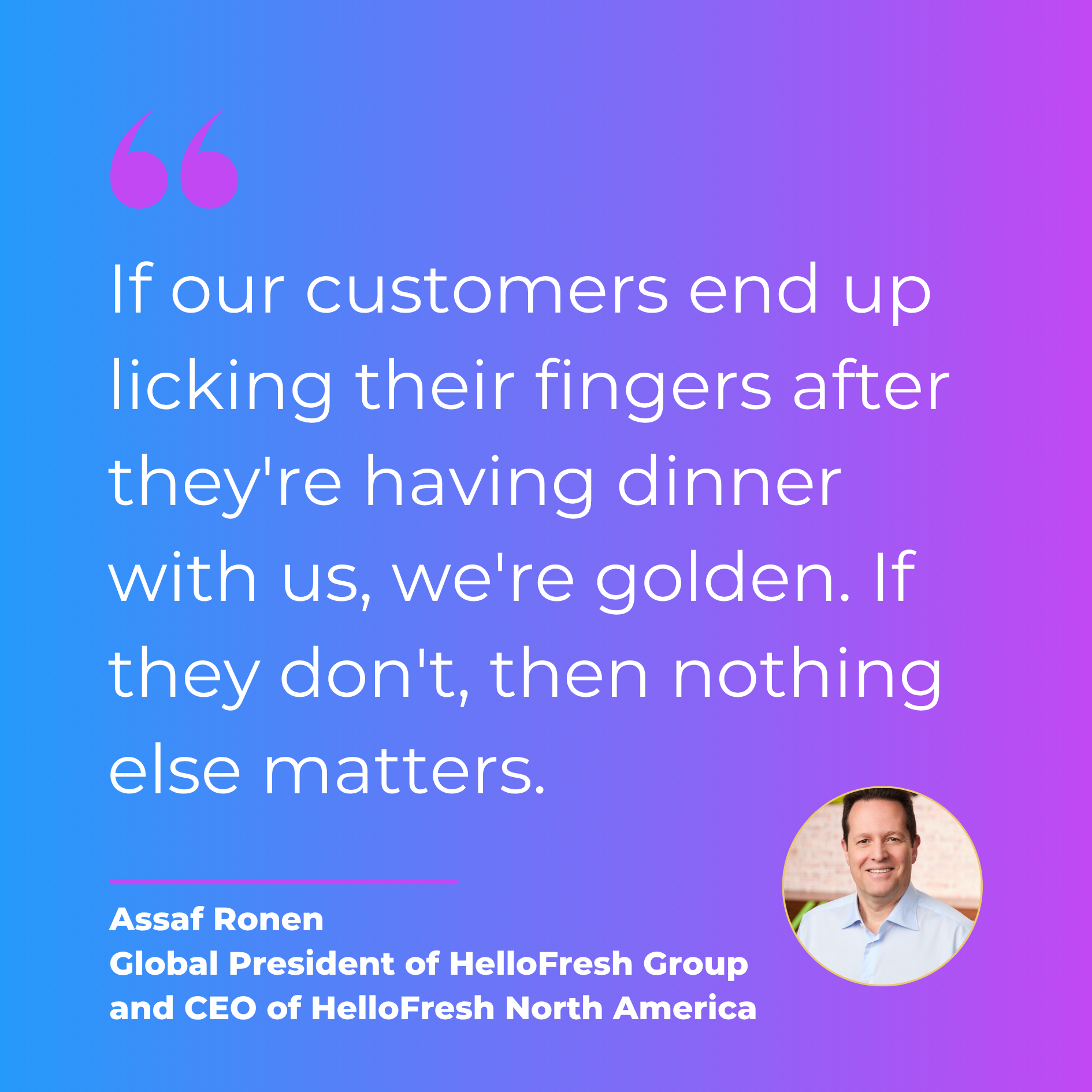
“If our customers end up licking their fingers after they’re having dinner with us, we’re golden. If they don’t, then nothing else matters.”
Subscription businesses live and die on retention. Yet the industry spent a decade leading with acquisition instead. Ronen’s read on long-term value starts with the meal itself. Customers stay when a low-effort dinner looks like restaurant food they made themselves.
The harder, more valuable outcome is behavioral. He wants families to sit together for a few minutes without their phones. That moment is what keeps them subscribed. The app sits on top of the food. It answers a question Ronen calls one of the most common in the world. Millions of people shut their laptops around six and ask what is for dinner. HelloFresh wants to own the moment that question gets asked.
Ronen describes an ambition that runs well past meal kits. He wants every household to feel it has a personal chef. That chef learns the family’s habits, down to which child refuses Brussels sprouts and bolts at the smell of broccoli.
The second half is helping on the nights customers do not cook with HelloFresh at all. A recipe saved from social media becomes something usable, with ingredients dropped onto a shopping list. A photo of a restaurant dish turns into instructions for making it at home. A snapshot of the fridge returns a dinner plan in minutes. “That’s a food operating system in my mind, beyond just the meal kits or the ready-to-eat food that we sell people,” he said.
Ronen is pointed about how the company judges generative AI. The order matters to him. “You don’t start with what can Gen AI do, you start with what can I do for the customer, and then how can Gen AI actually make it happen,” he said.
The payoff shows up in speed. HelloFresh runs one of the world’s largest databases of what people actually eat. It is built from fifteen years of meals and star ratings. Ronen is clear that stated preferences and real behavior diverge. People say they eat healthy, then order a burger, much like a patient rounding up their workouts at the doctor.
That data feeds a culinary team. The chefs trained in Michelin kitchens and at Cordon Bleu, and they still taste and iterate by hand. Generative AI then compresses everything after the cooking. It rewrites recipe cards and feeds the picking-and-packing robots. “We shorten the time from end of recipe development to people’s mouths and dinner tables from six months to days,” he said.
The other application is personalization that adapts to a household’s week. It spots the soccer-practice night that allows five minutes to cook. It also spots the Friday that invites something more ambitious. Ronen draws a sharp line with conventional search. “The difference between a search and a personal chef is you want to get a different dish every evening, but one that’s going to be a bullseye,” he said. He is just as clear about where AI fails. It fails when companies deploy it for its own sake and it never reaches the P&L.
A rapid-fire round drew out some of his sharp takes. Ronen chose acquisition over retention as his six-month priority. His logic is simple. The product converts once people taste it. He named the subscription model’s hardest constraint as its high barrier to entry. A physical product makes try-before-you-buy genuinely hard. He also argued that outside operators underrate the reinvestment a subscription business demands. The customer’s bar keeps climbing.
The lever he says goes unnoticed is loyalty. He rewards customers for small wins and for showing off what they cook. That deepens affinity through cooking tools, extra food, and novel items. Then came the hardest question, on his most painful unlearning. He was direct. “The first learning was that you should never assume you’re the smartest person in the world,” he said. A rationale anchored in the customer is what scales a company from five people to twenty thousand. He still rides delivery trucks and knocks on doors to hear it firsthand. That habit is the clearest sign that HelloFresh’s day-one framing is a working method, not a slogan.
Leave a Reply
You must be logged in to post a comment.