AppsFlyer's Elissa Brown on Why Measurement Silos Cost More Than Bad Data
Event Coverage Sponsored by

Every eCommerce team has a measurement stack. Very few have a measurement strategy. The distinction matters more in 2026 than ever, as the number of channels and sales destinations a brand must track has outpaced most organizations’ ability to make sense of it all.
Elissa Brown sits at an unusual vantage point. As an ecommerce evangelist and Industry Lead at AppsFlyer, she advises brands and agencies on building analytics foundations that actually inform decisions. She also co-founded Farmer’s Community Branding, a CPG food company she’s building from scratch alongside her day job. That dual role gives her a clarity about measurement gaps that pure consultants rarely develop.
ClickZ sat down with Brown at Shoptalk Spring 2026 to discuss what’s actually broken in the ecommerce measurement landscape and why team structure may matter more than technology.
Brown grounded her first point in her own experience launching a brand. Even at the smallest scale, measurement determines whether a founder understands the customer. “Data and measurement are really critical,” she said. “Whether you’re a tiny brand like mine starting out, or you’re really going to hone in on the measurement and flexibility.”
The observation cuts both ways. If a new CPG founder running a side project treats measurement as essential from day one, larger brands with fragmented teams have no excuse for treating it as secondary. Yet many do. Brown sees it repeatedly in her advisory work at AppsFlyer: brands that build media plans first and figure out measurement second don’t thrive in the same way that those who prioritize measurement upfront.
Brown was direct about the mobile gap. “Mobile is everywhere. We’ve heard for years, ‘It’s the year of mobile.’ Mobile is here and mobile is here to stay.” The consumer journey, she noted, grows more fragmented as brands roll out apps and diversify their touchpoints. Analytics infrastructure hasn’t kept pace.
The gap goes beyond technology. Too many teams focus on tracking performance metrics without stepping back to understand the full picture. Building a real measurement foundation means investing in analytics that explain why things happen, not just confirming that they did.
Asked about the biggest disconnect between what measurement platforms promise and what marketers receive, Brown didn’t point to technology. She pointed to organizational silos.
The problem, she explained, is structural. Social teams, investment teams, competitive intelligence teams, planning teams: they all generate insights for the same brand, but they work in parallel, not together. “There are so many different teams, and they all have different ways that they’re working, and so that causes some turmoil,” Brown said. “I think a lot of times with these silos, you’re not getting all your best information and insights.”
This matters because the channels brands now coordinate across, web, social, CTV, and more, demand a unified view. When teams operate independently, the measurement picture fragments, no matter how sophisticated any single tool might be. Brown’s prescription was clear: step one is listening, both to what clients want to solve and to what other teams in the same organization are learning.
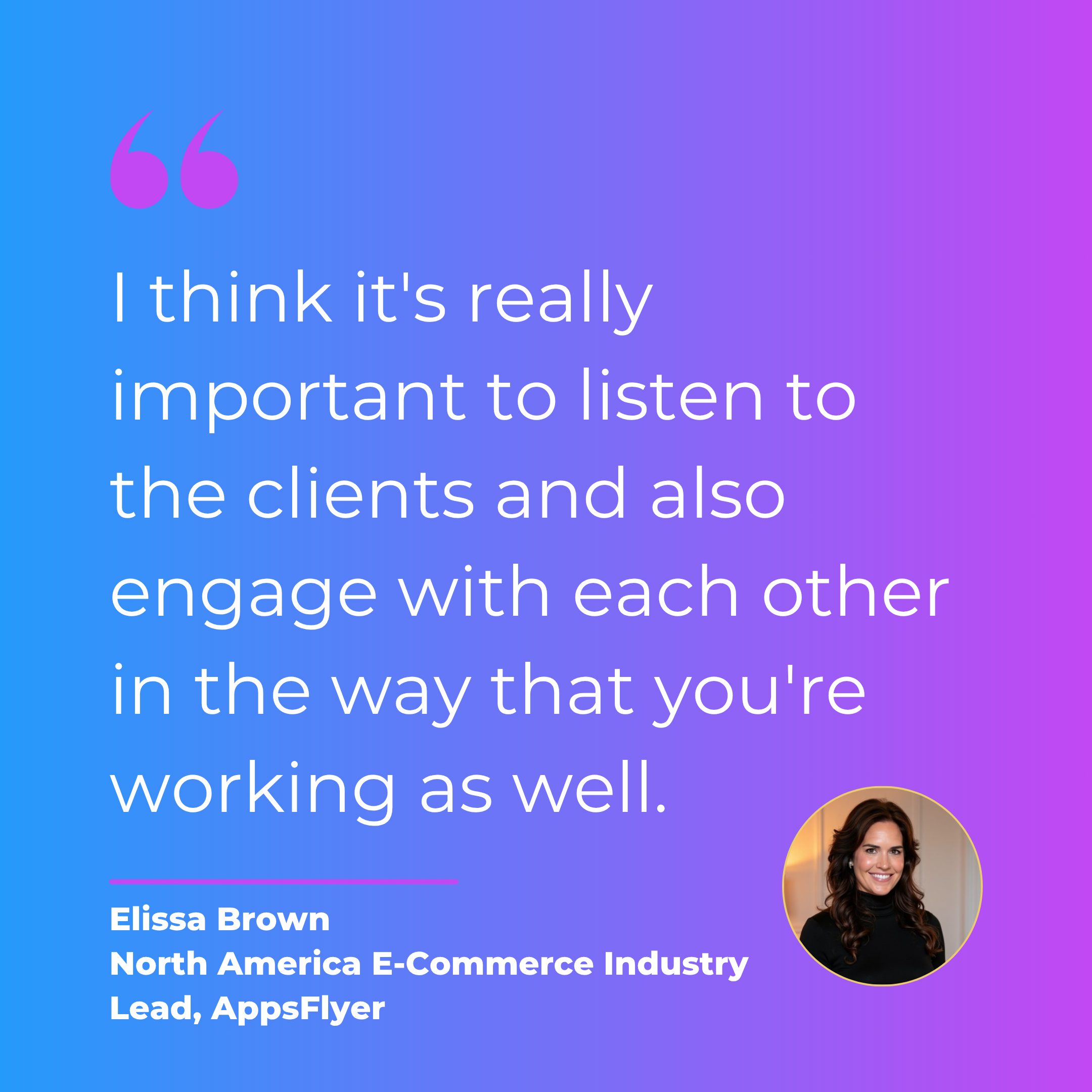
Brown took a measured stance on last-click attribution. Rather than declaring it dead, she argued for perspective. “I would say, it’s not broken. I think we need to understand that last click is limited,” she said. She pushed brands to look beyond linear plans. “We just need to focus a bit less on last click alone, and understand the whole picture through incrementality before just going to execute.”
Her framing offers a useful corrective. For many brands, the problem with last-click isn’t that it exists. The problem is that it crowds out other signals. When the default methodology only credits the final touchpoint, teams naturally optimize for bottom-funnel tactics. They underinvest in the upper-funnel work that creates the demand those tactics capture.
Brown returned to her founder instincts when discussing how AI and shifting consumer behavior reshape what brands need to measure. Customers now do more research before they buy. Each phase of that journey demands attention. “It’s like building sauce, I need all the ingredients when they come with it, right?” she said. “So you need all the ingredients, because I’m looking at customers, whether that’s big or small.”
The analogy is deceptively simple. Full-funnel visibility means tracking early engagement, mid-funnel consideration, and conversion as connected stages of one journey. Brands that only measure the last stage miss the ingredients that made the conversion possible.
Brown’s career spans agencies, social platforms, and now a measurement company. Each stop taught her something different about how marketing works in practice. Moving to AppsFlyer, she said, gave her the chance to “connect all of these efforts to see the bigger picture.” Her decision to launch a food brand at the same time came from watching others do it throughout her career: “I’ve watched so many other people do it, so I have started my own.”
That dual identity gives Brown a rare accountability. She doesn’t just tell brands they need better measurement. She lives with the consequences of not having it. For senior marketers evaluating their own analytics infrastructure, that kind of skin in the game is worth paying attention to.
Measurement stacks are easy to buy. Measurement cultures, where every team contributes to and benefits from the same picture, are hard to build. Brown’s career suggests that the harder version is the only one that works.
Leave a Reply
You must be logged in to post a comment.