Clarity on Best Day to E-Mail
Separating B2B and B2C audiences helps determine the best day of delivery for e-mail marketing messages.
Separating B2B and B2C audiences helps determine the best day of delivery for e-mail marketing messages.
Senders of e-mail newsletters continue to ponder the best day to send out campaigns. The “Q2 2006 Email Statistics” report from eROI separates business and consumer e-mail to determine the best day and frequency.
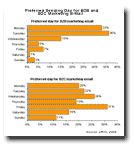
Business-to-business (B2B) e-mail is best sent earlier in the week. B2B e-mail received on Monday or Tuesday gives readers the opportunity to address the message before the week’s the business takes over. Thirty-three percent of survey respondents said they prefer to receive e-mail on Monday, and 36 percent on Tuesday. Preference for the remainder of the week declines sharply each day.
 |
| Click on thumb nail to view full-size image |
The best day to send business-to-consumer (B2C) e-mail isn’t as easily determined. Preferences peak for receipt on Wednesdays (26 percent) and Fridays (31 percent). Previous reports from eROI suggested Friday to be the best day for sending e-mail. The Wednesday delivery allows consumers to plan their weekends and drives them to shopping experiences. E-mail received on Fridays leads into the weekend and hits consumers when the weekend is top of mind. The low points for receiving B2C e-mail occur on Saturdays and Sundays.
Frequency is another issue marketers face when sending out e-newsletters. The widely accepted frequency of monthly for B2B messages remains with 35 percent of respondents stating their preference. However, 25 percent say they would like a weekly newsletter. Among consumers, monthly is the preference. Thirty-six percent said they want monthly e-mail; 21 percent would like e-mail every other week; and 17 percent like weekly e-mail.
It’s possible for frequency or the messaging to push subscribers to unsubscribe. Sixty-five percent of subscribers said they unsubscribe when a newsletter is not relevant. Fifty-six percent unsubscribe to newsletters with too high a frequency. Thirteen percent actually unsubscribe when a newsletter becomes “too relevant.”
Many subscribers feel watched when they receive a marketing e-mail based on a recently viewed item or other information gleaned from user behavior. The report suggests taking a step back. “Instead of sending an e-mail about the new blue jeans they just looked at, for example, try a blanket offer on jeans (or pants). It is a fine line, but it opens up the opportunity for cross-selling while at the same time remaining relevant,” the report states. The report also stresses the KISS, or, Keep it Simple Stupid, methodology with newsletters.
The findings are based on a survey of over 300 respondents.
Leave a Reply
You must be logged in to post a comment.