Home Depot's Retail Media Bet: Measurement Over ROAS
Event Coverage Sponsored by

Retail media networks keep growing their ad surfaces. More screens. More offsite formats. More CTV. But the harder question is whether any of it is actually moving the needle for the suppliers writing the checks.
At The Home Depot, that question is driving the next phase of Orange Apron Media, the home improvement giant’s retail media arm. And the answer, according to the team building it, starts with tearing down the industry’s fixation on a single metric.
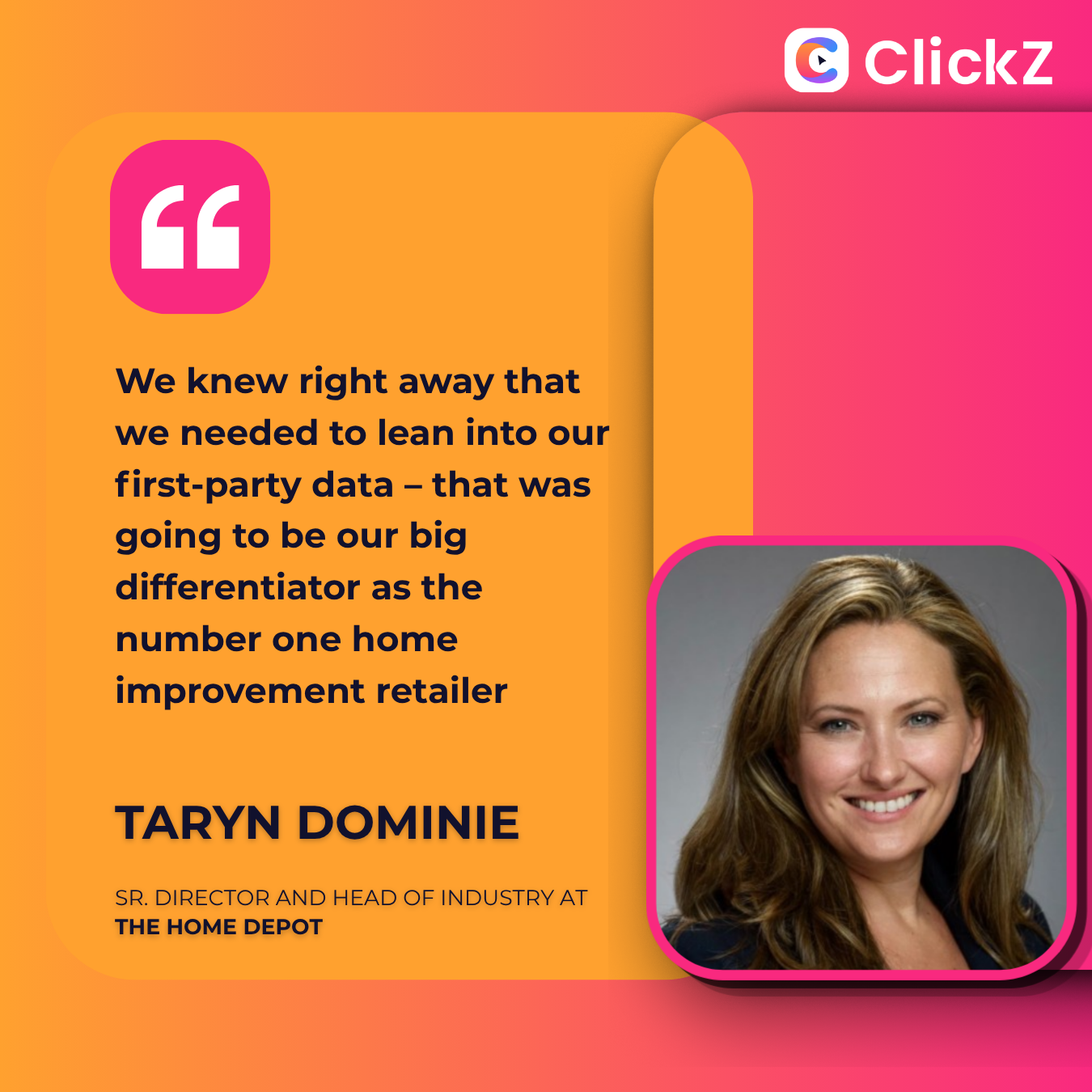
Taryn Dominie, Senior Director and Head of Industry at Orange Apron Media, has been building The Home Depot’s retail media business since 2020. In an exclusive conversation with ClickZ at Shoptalk Spring 2026, Dominie laid out how the network has evolved from a first-party data play into a full-service media platform, and why measurement sits at the center of everything the team is focused on next.
The shift starts with language. Dominie described an active effort to move supplier conversations away from ROAS as the primary success metric. “We’re really trying to have good conversations with our suppliers about shifting the conversation from ROAS, which has kind of been the traditional role of retail media, just return on advertising spend, which really is an efficiency metric, and really leaning into metrics that help them truly understand if we’re moving the needle on meaningful business outcomes.”
The distinction matters. ROAS tells a supplier whether their media spend was efficient on its own terms. It does not tell them whether that spend brought in new buyers, deepened pro contractor engagement, or drove lifetime value. Dominie framed this as the gap that keeps suppliers from making a compelling case to their own leadership: “They’ve got to go back to their leaders, and they’ve got to be able to explain to leaders that are not traditional marketers, how do I explain that I’m driving a return on the dollars that you’re entrusting me to invest in on behalf of the business?”
That internal reporting challenge is pushing Orange Apron Media toward incrementality testing, which launched in Q1 2026, and toward connecting marketing activity to actual sales transactions.
Home Depot has leaned into calling itself a specialty retail media network. It is a deliberate positioning choice. Dominie was clear about what separates the retailer’s audience from those of horizontal networks like Amazon or Walmart: “Our customers are not window shopping. They don’t shop us like they shop mass retailers. They come to us because they have a problem to solve, a broken faucet, or they’re coming to us because they’re taking on a project.”
That intent-driven customer base shapes every aspect of the media product. Content, product recommendations, and onsite experiences are all built around project-based and problem-solving behavior. For the pro segment specifically, the level of targeting gets granular. “You’ve got your general contractors, you’ve got your residential remodelers, you’ve got your pro painters, you’ve got your commercial pros,” Dominie said. “Being able to look at all of our data and what we know about our customers and segment the pro down to that level of granularity so that we can serve up solutions for them.”
The implication for suppliers is that they are not just buying impressions against a broad audience. They are buying access to highly segmented cohorts with clear purchase intent.
Orange Apron Media has deployed in-store screens in more than 100 locations, and the results hinge on placement and format. High-traffic areas, side caps at end-of-aisle positions, and pro-specific zones are where the screens sit. Dominie pointed to an underappreciated benefit: store associates. “Our associates now are gaining product knowledge by having the same access to those screens. So now we’re empowering our associates. They’re having better conversations with the customers.”
The physical retail environment creates a complexity most digital-first networks never deal with. Screens break in working warehouses. Forklifts complicate fixed installations. Scale remains the biggest challenge. Alongside video screens, The Home Depot launched a digital audio network last year, layering product messaging over in-store audio systems to reach customers through a second sensory channel.
The Home Depot’s longest-running sports partnership is ESPN’s College GameDay. That playbook is now being applied to what Dominie described as “over 100 Super Bowls”: the FIFA 2026 World Cup. The partnership integrates suppliers directly, with Behr as one of the anchor partners, using first-party data to target both DIY customers and pro audiences during tournament activations.
The approach extends beyond media. Watch parties in tournament cities, a touring bus, and one-to-one engagements between Behr’s pro sales teams and their customers are all part of the program. “We’re really thinking about it from a 360 view of what does this look like across the board, and how do we use this to truly engage our customers in unique and different ways that is going to be meaningful and memorable.”
Preparation, Dominie noted, has been “years in the making,” crediting CMO Molly Battin and the enterprise marketing team for recognizing the opportunity early.
Dominie’s career started on the agency side at Carat and Doner before moving to The Home Depot. That perspective shaped her final point. Most suppliers, she argued, treat retail media spend as a lower-funnel conversion budget, siloed from their broader marketing strategy. The missed opportunity is treating the retail media network as part of the full omnichannel mix. “How do I think about the holistic customer journey, which is not linear? Make sure that I’m talking to that customer at the time when they’re in discovery or research, and then how am I leveraging my audiences in a strategic way to pull that customer all the way from discovery down to conversion?”
More agencies are now entering the retail media space, she noted, helping brands move past the myopic focus on PLA, sponsored products, and ROAS.
For senior marketers watching the retail media space, the signal from Orange Apron Media is that the networks themselves are starting to push back against the metrics their suppliers have been trained to ask for. The ones that succeed will be the ones that help brands prove value their CFO understands.
Taryn Dominie, Sr. Director and Head of Industry at The Home Depot, has been a key leader at the home improvement retailer since 2013. Taryn leads the Orange Apron Media sales team responsible for driving ad revenue and gross profit across the Décor and Building Materials Business lines. With a diverse background in retail media sales, merchandise marketing, and online merchandising, she has consistently developed innovative strategies to enhance customer engagement and grow business. Outside of work, Taryn is passionate about tennis and pickleball and enjoys spending quality time with her family.
Leave a Reply
You must be logged in to post a comment.