NEST New York's CMO on Building Brand Communities When You Cannot Show What You Sell
Event Coverage Sponsored By

Fragrance does not do before and after. It cannot show a transformation, fix a problem, or explain itself in the language of performance beauty. For most brand marketers, those constraints would be a liability. For Erwan Le Berrigaud, CMO of NEST New York, they are a creative brief.
“What you can see as a disadvantage,” he said at The Lead Summit 2026, “is actually an opportunity to let communities and creators work with their imagination.”
Le Berrigaud joined the session moderated by Leslie Ann Hall, CEO and Founder of Iced Media, as the second of two prestige beauty brand CMOs discussing niche community building. Where amika’s conversation centered on professional communities and micro creator strategy, NEST New York’s was about something harder to operationalize: building authentic cultural relevance for a product that can only be experienced in person, in a world where discovery is happening increasingly on screens.
NEST New York was founded in 2008 as a selective range of candles sold in boutiques. It grew through word of mouth, retailer relationships, and the personal presence of founder Laura Slatkin, who hosted tastemakers, ran masterclasses, and built the brand’s early community through direct human contact. Le Berrigaud described this as a genuinely organic origin: “She really managed to create a community of people who are passionate about the brand.” That community existed before the brand had a content strategy or a social media presence.
The challenge Le Berrigaud inherited was bridging that offline community equity into an online environment, without alienating one in favor of the other. NEST New York launched at Sephora more than a decade ago, expanded its fine fragrance collection, and saw its DTC business grow significantly through and after COVID. Each of those transitions required the brand to find new communities online while protecting the relationships it had built in physical retail and professional spaces.
The current strategic tension he described is between the home fragrance business, which represents 60 to 65% of total revenue, and the fine fragrance category, where the most active online community conversations are happening. Social listening data shows that despite home fragrance driving the majority of commercial volume, the emotional conversations online center on fine fragrance. “The emotional connection you create with your consumers is far more important than the level of purchases your business can have,” Le Berrigaud said. For a brand navigating a major category expansion, that signal is a strategic directive: invest in fine fragrance community regardless of where the revenue currently sits.
Le Berrigaud’s framing of how NEST New York approaches TikTok was precise: “Content is the new targeting.” Fragrance Talk on TikTok generates 300 billion views per month. For a brand that cannot demonstrate its product on screen, presence in that community is not optional. But the approach cannot be product-led, because the product cannot be experienced through a screen.
Instead, NEST New York organizes its fragrance content around three emotional drivers.
Each of these three drivers maps to a different kind of creator and a different kind of content. Attraction content tends to be aspirational and lifestyle-led. Identity content tends to be expressive and community-embedded. Mood content tends to be personal and introspective. For NEST New York, briefing creators means first deciding which emotional territory is most relevant for a specific product or campaign, and then finding creators whose audiences live in that territory naturally.
The deeper point Le Berrigaud was making is that the absence of a visible benefit claim is not a handicap for a fragrance brand on TikTok. It is a reason to brief differently. The creator’s profile, their cultural resonance, and their authentic connection to the brand’s emotional territory matters more than any specific content instruction. “More important than the brief itself is the creator profile,” he said. “Making sure those people have some brand affinity so everything feels more authentic.”
The most concrete example Le Berrigaud shared was NEST New York’s partnership with HBO’s The White Lotus for a limited edition Cucumber White Sage candle. The collaboration was reviewed in the press as the only piece of White Lotus merchandise actually worth buying. It sold out in three weeks and produced the highest earned media value the brand had achieved in its history.
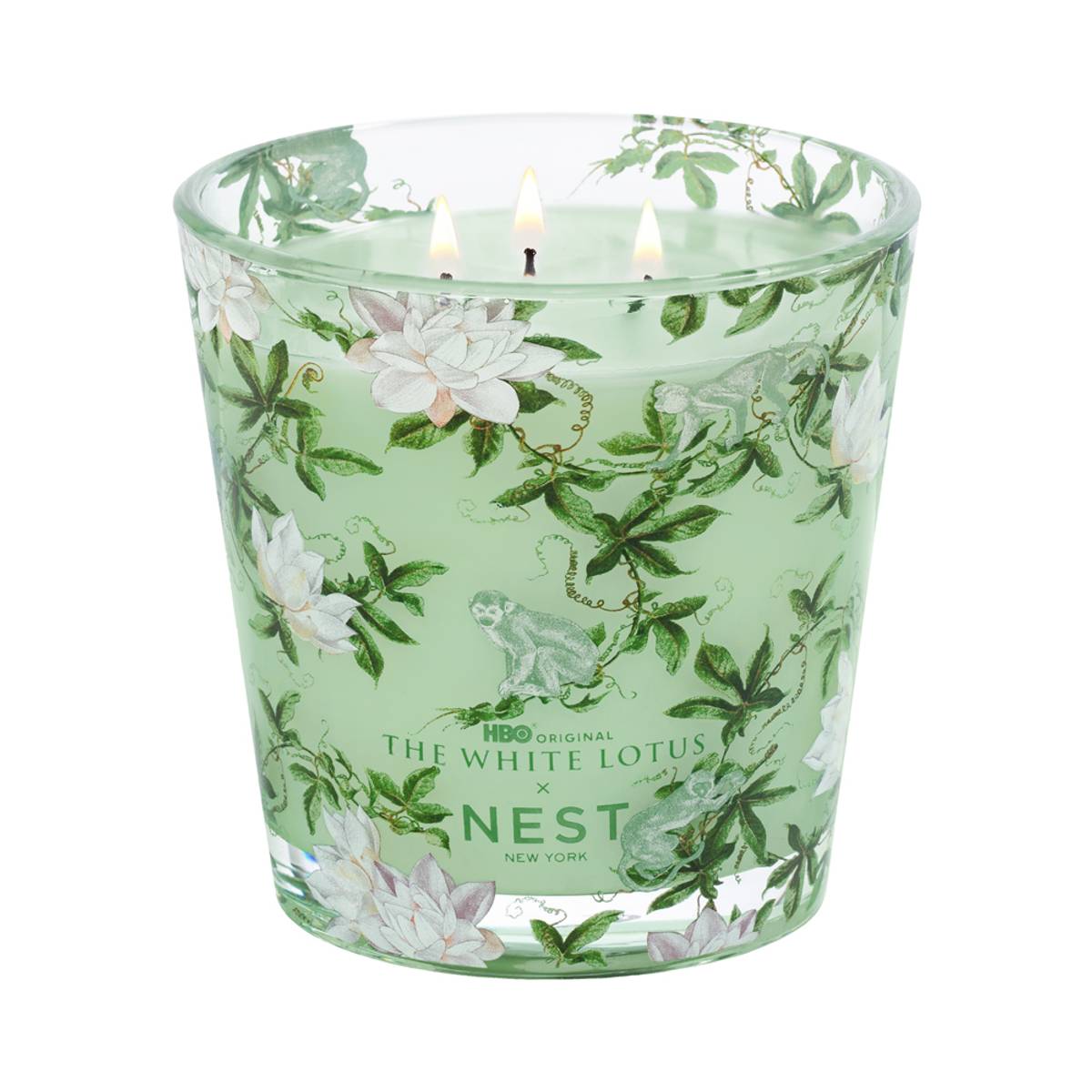
Le Berrigaud’s account of why it worked was instructive. He was direct that brand partnerships outside your core category require precision: “You can easily fall short of being a success in this case.” The NEST New York and White Lotus partnership worked because the brand equity overlap was genuine. Both stand for atmosphere, luxury American lifestyle, decor, travel, and memory. The show’s global reach, Le Berrigaud noted, also served NEST New York’s international ambitions: White Lotus is as culturally resonant in Europe as it is in the US, and for a New York-based luxury brand looking to expand its global footprint, association with a show that represents American lifestyle to international audiences was commercially meaningful beyond the immediate sell-through.
The result changed how Le Berrigaud thinks about entertainment partnerships. He described actively looking for the next right collaboration in entertainment, with the same emphasis on brand equity alignment as the White Lotus deal, while being careful not to be opportunistic about it. The creative territory that the partnership opened, finding communities outside beauty and outside social media to carry the brand’s message, is now a formal part of the brand’s community strategy.
When asked the same closing question about AI creators, Le Berrigaud gave a firm ‘No’. For Le Berrigaud, the reasoning was categorical. “It makes no sense for our brand, and especially our category. It is very far from the expectation of our consumer.” In a category where authenticity of experience is the entire value proposition, a synthetic creator is a contradiction.
Leave a Reply
You must be logged in to post a comment.