Lo & Sons President on How Far AI Closes the Gap With Enterprise Brands
AI is often sold to small brands as the great equalizer. The pitch says a 12-person team can finally operate like a 1,200-person one. Katie Omstead, President of Lo & Sons, has a more exact read. AI has closed the distance between small and enterprise brands. But the remaining distance is made up of problems AI can’t solve.
Lo & Sons creates premium travel and work bags designed to make life on the go easier. Helen Lo founded the brand more than 15 years ago. The team is lean enough that Omstead leads comprehensively across brand strategy, marketing, operations, and product. She spoke with ClickZ at The Lead Summit about what AI changes for a brand her size, and what it cannot touch.
Omstead anchors everything on why customers stay. Lo & Sons began with one person solving one problem. Helen Lo traveled constantly and could not find a bag that was both functional and beautiful. So she designed her own. “She was customer one, she was solving the problem,” Omstead said.
That origin still governs how the brand designs. Every product has to start from a real customer problem, understood from lived experience rather than guessed at. The connection has to feel authentic, she argues, not performed.
Consistency does the rest. It shows up in construction, materials, design, and durability. It also shows up in conduct. Whether a customer needs guidance or a full bag replaced, the rule is “doing the right thing and keeping the customer at the core.” Fifteen years of that is how a small brand earns the loyalty bigger brands spend fortunes trying to manufacture.
Speed is where AI has changed the most. “AI has really dramatically helped us move a lot faster, free up a lot more time, do a lot more with a lot less,” Omstead said. A lean brand also adopts AI faster than a large one. “We can test and learn and adopt tools way faster than an enterprise brand.”
She has seen the other side. Earlier roles at Johnson & Johnson and in retail consulting showed her how long change takes inside a large organization, slowed by hierarchy and process. Without that drag, Lo & Sons can act on a new capability almost at once. In a market that resets every quarter, moving early is its own advantage.
The limits are just as clear. “AI is great, but it doesn’t eliminate budget constraints,” she said. Enterprise infrastructure, marketing spend, headcount, and years of accumulated data stay out of reach. So do the activities that simply cost money. Brand trips, large influencer sponsorships, and in-person activations need resourcing a lean team cannot match.
Commerce now has an AI product for almost everything, and that abundance is a trap. Omstead runs two filters to keep the stack clean. The first is value. A tool has to help with “time, cost, and complexity,” meaning it makes the team faster, simplifies the business, or saves money.
The second filter is redundancy. “Does this tool actually do something that another tool can’t?” she asks. She avoids features likely to be absorbed into a larger platform within months. A stack that grows unchecked turns noisy, and a small team ends up paying for capability it never uses.
The lean structure makes the call quick. A tool proves itself fast or not at all. Omstead can tell “within a couple days, and probably a week at the longest” whether it is helping. If it is not, the team moves on. She agreed readily with the idea of failing faster, since the speed to pivot is the point.
The team uses Claude for inbox triage, email synthesis, prioritization, agendas, and presentations. “Any recurring or repetitive or really manual tasks, you can have Claude take care of that for you.” Work that once took an hour now takes minutes, and the whole team picked it up quickly. For a brand with no spare time, that breadth is the value.
For most of its history, Lo & Sons did not plan seasonally. Its bags are built for year-round use, for work that never stops and travel that simply changes shape across the calendar. A tighter paid media environment changed that. The team can no longer market everything at once, so timing has to be sharper.
AI now carries much of that work. An AI-driven forecasting and inventory tool, improved continually by the company behind it, has made the brand’s planning more sophisticated. The underlying logic has not moved. It still starts with how the customer actually lives.
Before the pandemic, a shopper might need one bag for a morning workout, a day at work, and drinks that evening. Now the same shopper might pack for two remote days that roll into a long weekend. The behavior shifts. The design question stays the same: what problem is this bag solving?
Asked what small brands underestimate about competing with enterprise, Omstead points to business fundamentals. The real challenge is “to build out an operational structure that is both financially sound and scalable.”
Founders tend to lead with the visible strengths, she says: a strong story, a sharp idea, marketing they can run well. The harder work sits underneath, in financials, operating processes, and infrastructure. Those functions take money, people, and time, and they are where enterprise brands quietly hold their edge. AI helps a lean team “punch above our weight.” It does not build the structure for them.
Lo & Sons grew without a large media budget, a celebrity founder, or funding to buy awareness. Two things did the work, Omstead says: the brand story and the product.
The story is genuine. Helen Lo was in a second act, a retired professional traveling constantly, who could not find a bag that was both stylish and smartly designed. She built one and became her own first customer. That lived experience is replicable, Omstead argues. Any founder can start from real passion and a real problem.
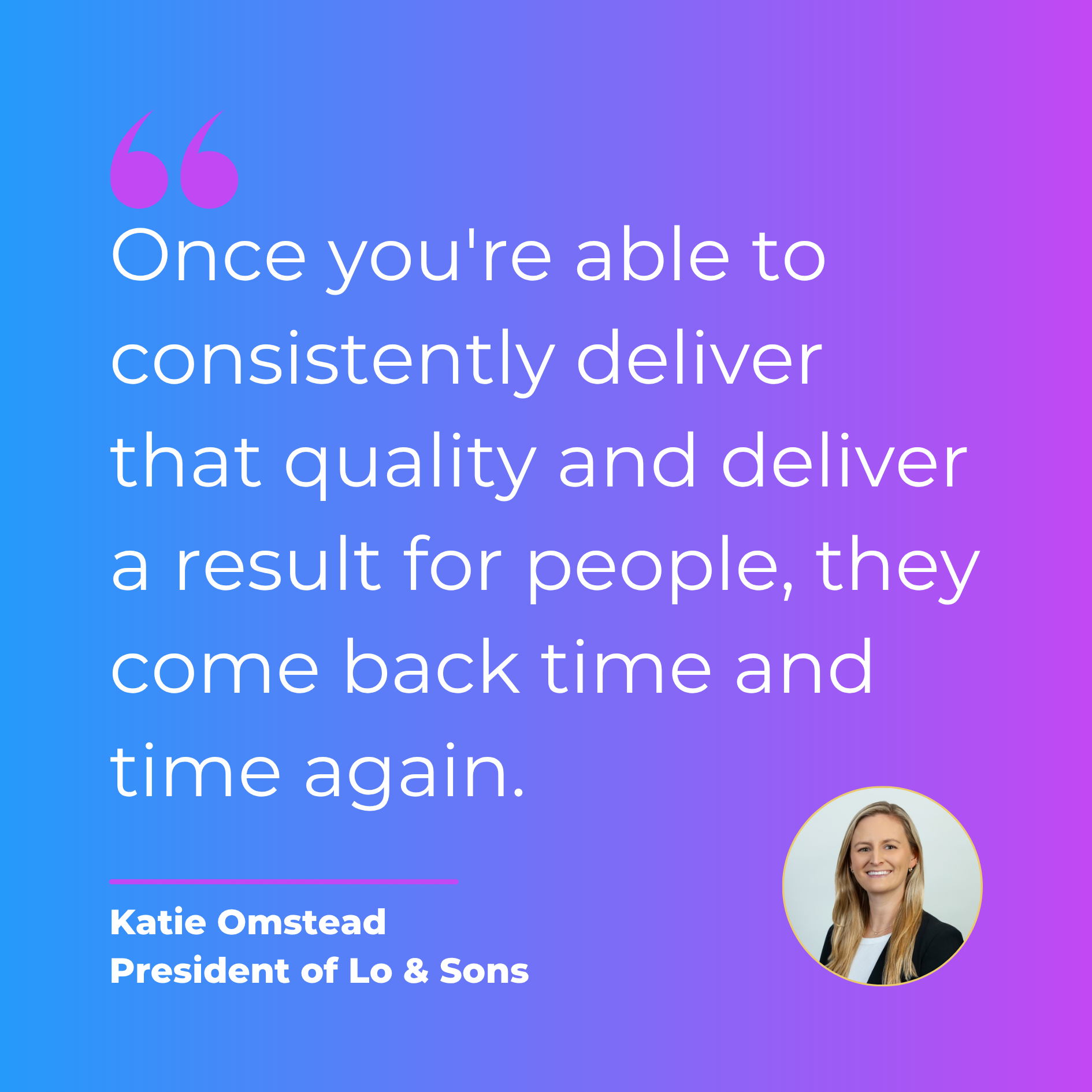
So is the standard that follows it. “Set that high bar of quality and just refuse to come down.” The temptation to ease off grows as financial pressure builds, especially for a lean brand. Holding the line is what earns longevity. “Once you’re able to consistently deliver that quality and deliver a result for people, they come back time and time again.” For Lo & Sons, that is the recipe, and Omstead believes it travels.
Leave a Reply
You must be logged in to post a comment.