For Gen Z, Trust Beats Scale in Fragrance and Fashion
A fragrance brand with no department store counter and no celebrity face is not a brand in trouble. For a Gen Z shopper, that gap can be the whole appeal. The category built its reputation on aspiration: a famous face, a glossy backdrop, a scent you saw advertised before you ever smelled it. That model works only if the shopper wants a sales pitch. And Gen Z usually does not.
Sourabh Sharma runs two very different consumer brands. He is head of marketing at Histoires de Parfums, a niche perfume house that builds each scent around a historical figure or moment. He is also chief marketing officer at Print All Over Me, a made-to-order apparel brand built on zero waste. Sharma spoke exclusively with ClickZ at eTail Boston 2026 about why niche, story-led brands are beating scale and celebrity with Gen Z.
Histoires de Parfums has no U.S. select department store presence and no celebrity ambassador. Sharma treats that as an advantage. “It actually helps to be a little bit more niche and to be a bit more differentiated,” he said. He pointed out that chasing a celebrity endorsement feels more like a millennial habit than a Gen Z one. Millennials wanted what a famous face had. Sharma’s Gen Z customers discover the brand through social media, influencer marketing, and the niche fragrance community itself. From there, they follow tangents into the stories behind each scent, including a fragrance inspired by Jules Verne, who wrote about oceanic voyages and the novel Around the World in Eighty Days.
The brand builds each fragrance around a historical character or event. That sounds like a hard sell to a 22-year-old raised on short-form video. Sharma says the opposite is true. Millennials grew up without phones, so the digital world felt novel to them. Gen Z and Gen Alpha grew up inside phones, so they find the analog world novel instead. Sharma also points to a broader shift. Interest in scent and sensory experience grew fast after the pandemic. That puts fragrance roughly where beauty and skincare stood ten to fifteen years ago. He calls the timing “right place, right time.”
Sharma once said experiential marketing is dead. ClickZ asked him to square that with a category built on people smelling a product before they buy. His answer draws a line rather than a retraction. A decade ago, brands built oversized event backdrops and staged Instagram moments. Sharma says that era has faded. Audiences now want something rawer: bloopers, real process, and content that looks lived-in rather than staged. Fragrance still needs an in-person moment, since customers have to smell a scent to understand it. But Sharma ties that moment to story, mood, season, and gifting instead of big productions. Gifting does most of the work here, since it hands the brand a shared, personal moment without needing a backdrop at all.
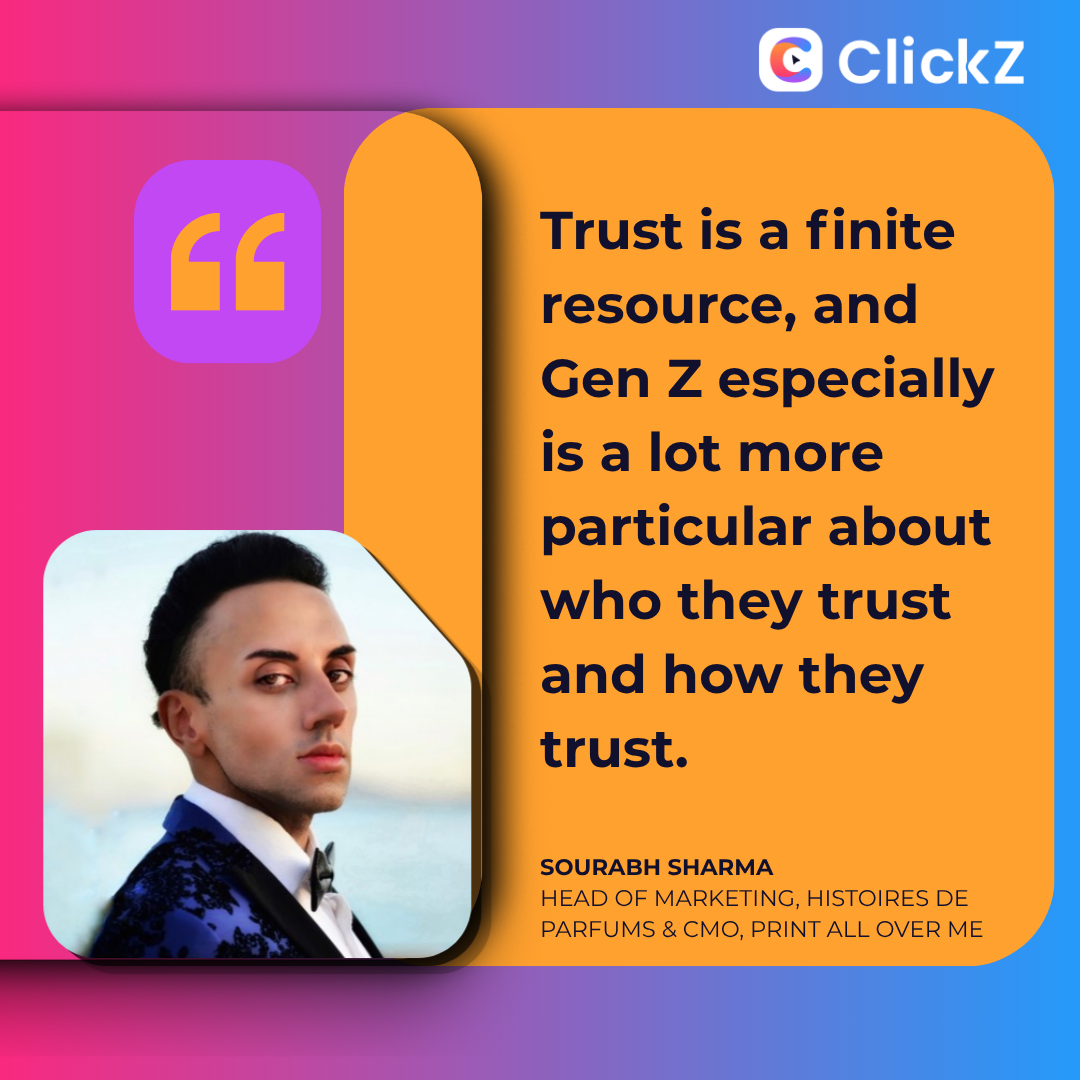
Sharma compared Histoires de Parfums and Print All Over Me, and said the real lesson crossed both brands and centered on trust more than product. “Trust is a finite resource,” he said. Gen Z is choosier than past generations about where they extend it. Both brands earn that trust the same way. They build around what the audience already values, especially sustainability and customization, instead of telling Gen Z what to want. Fragrance customers layer scents to create something personal. Print All Over Me customers print their own designs onto premium blanks. Neither brand hands over full creative control. Both give customers enough control that they feel real ownership. Sharma says that feeling of ownership keeps a brand part of someone’s life once the first connection forms.
Sharma also runs a digital marketing agency FIG or out alongside his two consumer brands. He said the same mindset drives all three. Labels like “millennial” or “Gen Z,” he argued, box people into groups that do not really exist, since everyone eventually ages into the next generation. “It’s not really an audience segment you’re going for,” he said, describing generational marketing as a wave to move with rather than a target to chase. In his view, technology does not change consumer behavior. It only changes how people discover things. Newspapers gave way to social feeds, and Sharma expects AI agents to come next.
Sharma’s advice to early-stage DTC marketers targeting Gen Z is direct. Stop assuming this audience scrolls without paying attention. Start watching how they actually use a product, because Gen Z will remix a campaign in ways no brand brief predicted. Two very different product categories, plus a marketing agency, point to the same conclusion: scale and celebrity are optional. Brands still have to earn attention, and with this audience, story and participation earn it faster than fame ever will.

Leave a Reply
You must be logged in to post a comment.