Brand Voice Is Not a Style Guide Problem
Event Coverage Sponsored by

When generative AI made content production essentially free, it also made brand indistinction nearly universal. The result, now visible across virtually every social feed, is what Samantha Critchell, VP of Corporate Communications at e.l.f. Beauty, called “slop”: content that could have come from anywhere, because the tools that produced it were trained on everything. The question The Lead Summit audience put to her was not whether AI-generated content is bad; it’s how brands protect something irreplaceable when the cost of producing undifferentiated content has collapsed to zero.
The framework e.l.f. uses to govern every piece of content is a three-question filter: Does this initiative live up to our ethos? Do we have the authority and credibility to speak to it? Does our community actually want to hear from us on it? All three gates must open. Critchell was explicit that the purpose of this filter is directional. “If something doesn’t ladder up somewhere in between,” she said, referring to the brand’s mission and purpose, “then it’s not ours to talk about.”
The word “authority” carries weight here. e.l.f.’s campaign “So Many Dicks,” which called out the underrepresentation of women and people of color on corporate boards, earned 99% positive sentiment. That result, Critchell argued, was a direct function of readiness rather than boldness. The brand’s own board was already composed the way the campaign advocated. “It was an evolution, not jumping into something new and shiny.” The campaign worked not because e.l.f. said the right thing, but because it had the receipts.
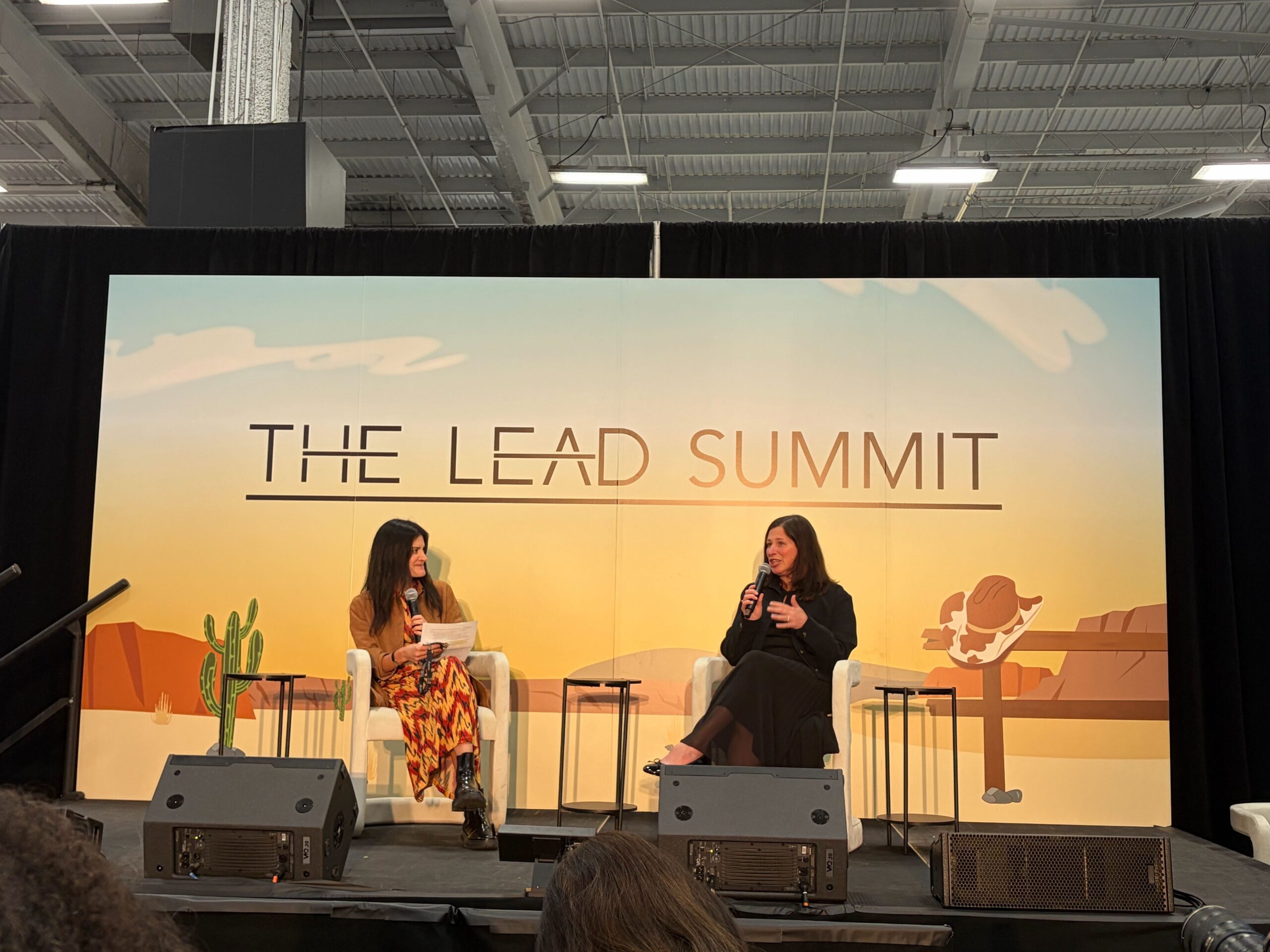
Critchell’s treatment of LLMs was notably practical. The trend in marketing conversations is to frame AI as either a threat to authenticity or a productivity windfall. She declined both framings. e.l.f. has an internal AI platform built on ChatGPT but trained on the brand’s own books and language conventions, including the brand-specific expletive substitute “elfing.” When the platform suggests editorial alternatives, it suggests e.l.f.-specific ones. The tool, in other words, has been taught the brand’s voice rather than being asked to approximate a generic version of it.
The same logic extends to how e.l.f. approaches LLM search results. Critchell described a disciplined process of tracking what queries consumers are using in LLM prompts about e.l.f., then mapping those queries against the ethos filter. If the brand has genuine authority in a space, it invests in showing up there. If it doesn’t, it leaves the space alone. The example she used was cruelty-free positioning: e.l.f. is double-certified, so when consumers ask LLMs for cruelty-free beauty brands, e.l.f. should show up first. “I don’t know if anybody would ever search for a brand that’s not cruelty-free,” she noted. “We don’t want to show up there. And that’s okay.”
The earned media dimension of this is where the argument gets most specific. Critchell pointed to YouTube, LinkedIn, and Reddit as the three channels currently feeding a significant share of LLM results. The implication is that the traditional earned media playbook, which most brands deprioritized during the paid social boom, has acquired a new commercial rationale. Being covered by authoritative outlets on the topics you want to own is now an infrastructure for how AI surfaces your brand.
The clearest proof point Critchell offered was e.l.f.’s Super Bowl commercial in February, featuring Melissa McCarthy. The spot brought together three specific cultural threads simultaneously: the conversation around Bad Bunny, events in Minnesota, and e.l.f.’s over-indexing with Hispanic consumers. The result was 100 million YouTube views, the majority of which came after the game from people who went looking for it. The point was not the stunt scale. It was the underlying preparation: the brand tracked what its community was engaging with, mapped those signals against what e.l.f. authentically owned, then connected them in a single piece of content. “They found us afterwards,” Critchell said, “because it brought together everything our community cares about.”
Critchell closed with the concept e.l.f. calls “zero distance,” which she was careful to distinguish from the more passive notion of listening. Referencing a colleague who had spoken earlier on the same stage, she drew the line between listening, which implies receiving, and hearing, which implies acting. Zero distance means taking community insight and converting it into something tangible. In an environment where LLMs will increasingly personalize content retrieval to individual preferences, the brands that have already built genuine community feedback loops will have a structural advantage. A model that knows what Caroline likes will surface the brands that have already been building a relationship with Caroline. The brands that have been producing undifferentiated content at scale will not appear.
What Critchell was describing, ultimately, is a return to something editorial professionals have always known: point of view is not a brand attribute, it is a competitive strategy. The brands that establish what they genuinely own and build proof points for it, train their AI on that specificity, and earn coverage in the outlets that matter will find that algorithmic personalization amplifies them rather than commoditizes them. The ones that treat AI as a content factory will find the opposite.
Leave a Reply
You must be logged in to post a comment.