Sports Marketing Playbook Every Brand Needs in 2026
Event Coverage Sponsored By

When Saatva CEO Ron Rudzin watched coverage of the Paris Olympics, he read that athletes were unhappy with their sleeping arrangements in the village. He called his CMO into his office. Joe McCambley gave him the honest answer: the Games were already running, there was no way to ship mattresses to France in time. Rudzin’s response had nothing to do with Paris. “This can never happen to American athletes. When the Games come back to the United States in 2028, every US athlete needs the best possible sleep.”
That conversation became a full Olympic and Team USA sponsorship. Every athlete passing through a US Olympic Training Center, all 10,000 of them, now sleeps on a Saatva mattress. A direct-to-consumer mattress brand had found its way into the center of America’s most-watched sporting event. Not by outspending the category; by finding a genuine problem it was built to solve.
At The Lead Summit 2026, McCambley told that story alongside Seth Yassky, Head of Partnerships Marketing and Commercialization at Proximo Spirits, the parent company of Jose Cuervo. Together they laid out what sports partnership strategy looks like when it works, and the answer has less to do with media scale than with fit, activation discipline, and organizational readiness.
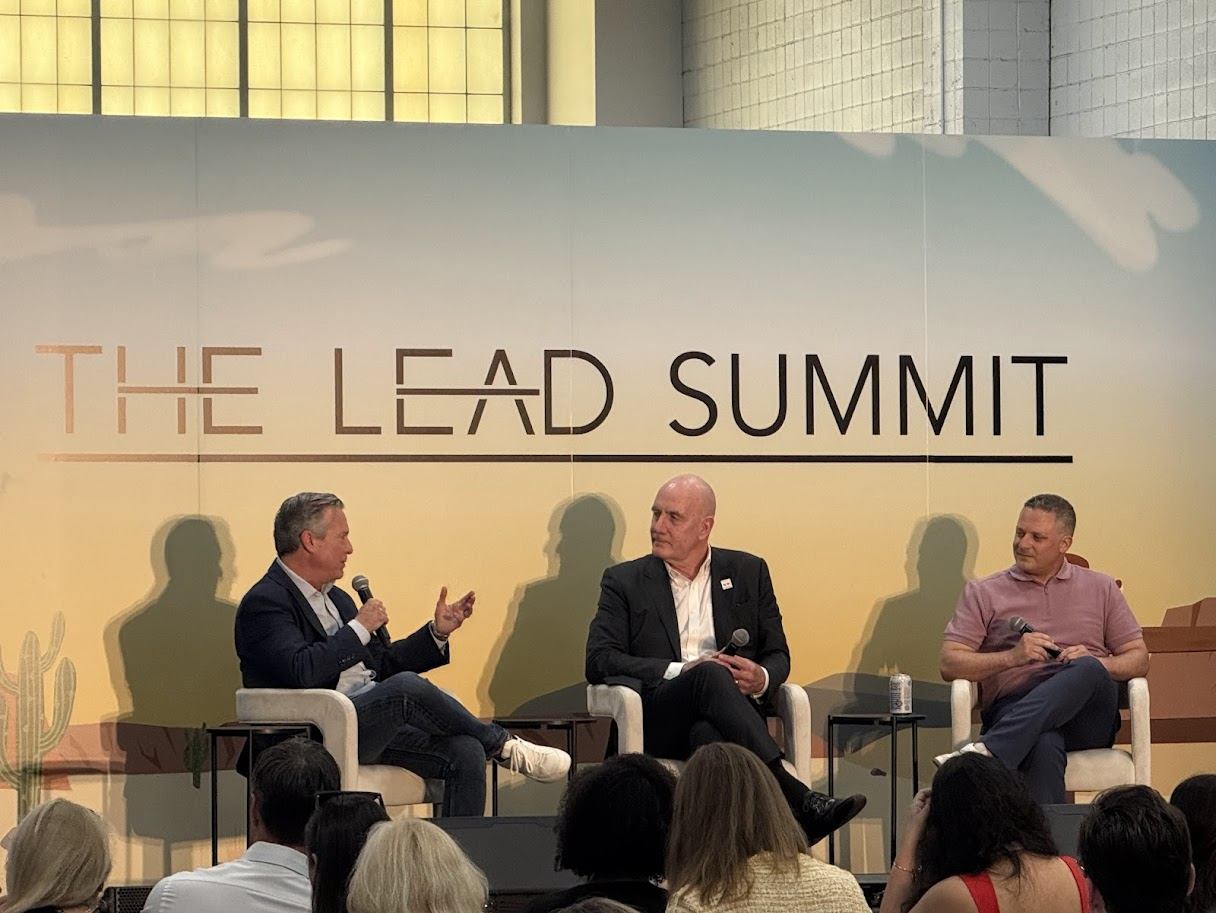
Yassky runs a sponsorship portfolio spanning NASCAR, UFC, and regional activations across Proximo’s brand portfolio. His selection logic runs in the opposite direction from how most sponsorship conversations start. Brands typically begin with a property and ask whether they can afford it. Yassky starts with a brand objective and asks which property, if any, actually serves it.
For Jose Cuervo, motorsports builds relevance with middle America and a younger male audience. UFC connects to Hispanic culture, a core demographic for the brand. Neither choice came from prestige or competitive pressure.
“It’s not about the platform or property first,” Yassky said. “It starts with what we’re trying to achieve as a brand and which platforms actually serve that.”
The national-versus-regional decision follows the same logic. A national program delivers scale at a significant cost premium. Regional programs are more targeted and more affordable, but carry a lower ceiling. The right answer depends on what the brand needs at that specific moment. Yassky was skeptical of anyone offering a universal formula.
Both speakers were direct about the part of sports marketing that rarely features in deal announcements. The activation work after the contract is signed determines whether the brand captures the value or leaves it on the table.
McCambley’s argument here was partly organizational. Saatva keeps all its marketing functions inside the same structure. When a high-visibility moment arrives, every team joins a single activation plan. PR, content, linear TV, streaming, paid social, and search all work from the same calendar.
“If you are a siloed organization,” he said, “you need to become a unified one before you enter a major sponsorship.”
The Olympics is not an advertising platform brands bolt onto an existing media plan. It is a programming calendar the entire marketing organization needs to sync with. Brands that treat it as the former will consistently underdeliver.
Yassky made the same argument at the property level. He treats his sports partnerships as collaborative, not transactional. Proximo shares its measurement framework with its properties, giving them visibility into what the brand needs to hit its return targets. A property that understands your goals has a reason to help you meet them. One that only knows you paid the fee does not.
He also flagged an activation mistake he sees repeatedly: brands pour energy into the venue while ignoring the far larger audience outside it. Ninety percent of fans of any major sports franchise never attend a live event. A brand that only activates inside the stadium talks to 10% of its potential audience, then calls it a sports marketing program.
The economics of Olympic sponsorship are counterintuitive. McCambley put Olympic CPMs at roughly four times the open-market rate for comparable reach. For a brand the size of Saatva, that premium is not small. But the exclusivity built into the sponsorship changes the math entirely.
During the Olympic broadcast window, no competing mattress brand can advertise. Saatva owns 100% share of voice in its category for the duration. The impressions it ran during the Paris cycle outperformed every other media investment the brand had made by a factor of four to six. The premium CPM, adjusted for that exclusivity, made the investment competitive on efficiency grounds alone, before counting the brand equity or mission narrative it generated.
The wider point McCambley was making is that sponsorship value does not come only from audience size. It comes from the competitive environment inside that property’s window. A brand that competes with fifty others in the open market becomes the only voice in its category during a major sponsored event. Standard CPM comparisons do not capture that shift, which is one reason sponsorship economics stay misunderstood.
What both speakers described is a discipline that demands more strategic clarity upfront than most media buys require. Know what the brand needs before choosing a property. Build the organizational alignment to activate across every relevant touchpoint once the deal is signed. Treat the property as a partner with a stake in your results.
Leave a Reply
You must be logged in to post a comment.