Most beauty brands treat professionals as a distribution channel. They court them at trade shows, offer wholesale pricing, and hope the endorsement follows. amika took a different approach from the start. When the brand launched roughly 20 years ago, industry outsiders built it on a simple belief: stylists were not a sales target but a creative partner. That founding instinct, as Nilofer Vahora, CMO of amika, explained at The Lead Summit 2026, still drives everything the brand does in community today.
The session was part of a broader conversation on niche community building, hosted by Leslie Ann Hall, CEO and Founder of Iced Media. Vahora shared a detailed account of how amika has scaled its stylist community without weakening it, how social listening and AI tools shaped a major retail launch, and why micro creators delivered better new customer numbers than any macro partnership the brand had run.
Why Stylists Are Pillars, Not a Pyramid
The standard influencer community model is a pyramid. Celebrities and macro creators sit at the top. Working professionals and micro creators form the base. Budget and attention flow upward. amika rejects this entirely. Vahora described the brand’s stylist community as a set of pillars rather than a hierarchy. Each pillar, from celebrity stylists to working salon professionals, gets the same level of access and engagement from the brand.
The reason is practical. A working stylist in a local salon sees dozens of clients every week. Those clients trust their stylist’s product picks in a way they do not trust an ad or a macro creator post. That professional is, as Vahora put it, on the front lines of the consumer relationship. Treating her as a lower tier is simply underinvesting in the most direct path to consumer trust the brand has.
The Stylist Circle, amika’s 2026 ambassador program, reflects this thinking. It is not built around follower count. Instead, it brings together stylists at every level, gives them equal access to the brand, and asks them to shape product development, appear in campaigns, and work behind the scenes as well as in front of the camera. “They are people who will tell us what products they need to see,” Vahora said. “We develop products shoulder to shoulder with them.”
How amika Chose Creators for Its Ulta Beauty Launch
In December 2025, amika launched at Ulta Beauty. For a brand that built its name in professional channels and at Sephora, this was a significant step. The launch strategy rested on three criteria for every creator the brand worked with. First, the creator needed genuine affinity for amika, not just category relevance. Second, they needed an authentic connection with their audience, not just a large following. Third, they needed real fandoms, communities of people actively engaged with them rather than passive audiences scrolling past.
To find those creators, amika used social listening tools and AI to map creator networks. The goal was to go three levels deep: identify the key opinion leaders, understand their communities, and then understand those communities’ communities. The result was a launch built around creators with real cultural ties to the brand rather than creators chosen for reach alone.
The clearest example was a partnership with a creator known to Love Island audiences. The connection to amika came through her stylist, who had been using amika products on her hair for some time. When the brand reached out, it asked which product she actually used. Her answer was the Wizard Detangling Primer. She then received full creative freedom to make content in her own way. The result featured the product on a protective style. That detail opened a conversation in the comments about natural hair, identity, and culture that amika had not planned and could not have scripted.
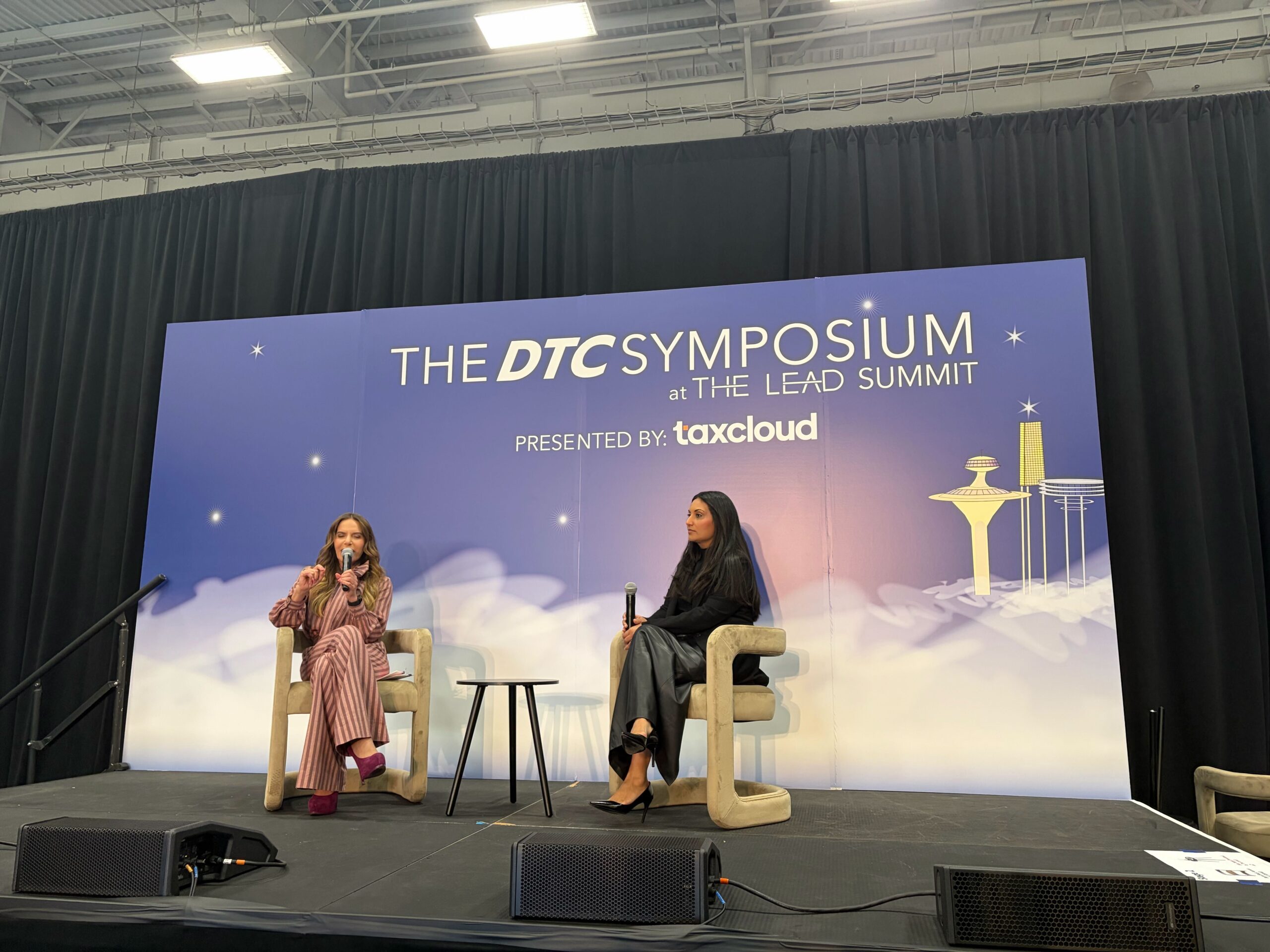
Leslie Ann Hall (Left); Nilofer Vahora (Right)
“It really became a conversation about identity, community, and culture,” Vahora said. “That is the ideal moment when you work with someone who has authentic fandom and is truly relevant in culture.”
Why Micro Creators Drove the Body Care Launch
Earlier in 2026, amika launched a body care line. The product came directly from the community. Surveys showed that body care was the most requested category from existing amika customers. So when the brand launched its signature scent at the end of 2025, it activated its micro creator community first. The result: 65% of customers who bought that product were new to the brand. That finding shaped the entire approach to the body care launch that followed.
Vahora used the phrase “share of shower” to explain the commercial logic. amika customers do not tend to buy one product and move on. They go deep into the range and keep coming back. Body care was a natural way to extend that loyalty further down the shower routine. Leading with micro creators rather than macro partners or paid media produced week-over-week growth that the brand has sustained since launch.
The point Vahora kept returning to is that micro creators are not a budget compromise. They are a deliberate choice for specific goals. When the aim is new customer acquisition among an audience that already trusts the creator’s point of view, a micro creator with a tight, engaged community consistently outperforms a macro creator with a larger but more passive one.
LTV Over CAC, Every Time
When Hall asked Vahora directly which metric matters more, customer acquisition cost or lifetime value, the answer was immediate: lifetime value. “I am always thinking about how we keep that customer coming back and loyal to the brand.”
For amika, that answer reflects the shape of the business. Customers who enter the brand tend to stay and buy broadly across the range. So every community investment, whether with a working stylist or a micro creator with 15,000 followers, functions as a retention investment as much as an acquisition one. That framing changes how you evaluate the returns. And for amika, it has consistently pointed toward the same conclusion: invest in the community closest to the consumer, give them genuine access and creative freedom, and the commercial results follow.
The Merkle B2B 2023 Superpowers Index outlines what drives competitive advantage within the business culture and subcultures that are critical to succ...
Making forecasts and predictions in such a rapidly changing marketing ecosystem is a challenge. Yet, as concerns grow around a looming recession and b...
Pinterest’s first beauty report shows search getting far more specific
3w
ClickZ
Pinterest’s first beauty report shows search getti...
Pinterest has published its first Beauty Trend Report, tracking how searches for hair, makeup, nails, fragrance and skincare have moved from broad cat...
Beauty Holiday Campaigns 2025: What This Year’s Creative Says About How Bra...
11m
ClickZ
Beauty Holiday Campaigns 2025: What This Year’s Cr...
Holiday campaigns in beauty used to follow a predictable formula: metallic palettes, a few product close-ups, and a safe emotional arc. In 2025, that ...
Until recently, skincare and makeup operated as two distinct categories. One addressed long term care. The other focused on short term aesthetic chang...

Leave a Reply
You must be logged in to post a comment.